Research · Rates & Yield Curves
Asian Currencies Are Sliding — A Late Cycle Funding Signal

Asian currencies are weakening — and this is not a policy mistake. In this episode of
Independent by Design — The Builders Lens, we explain why the Japanese yen
and South Korean won are signaling tightening global dollar funding conditions, not central
bank failure. This is a late-cycle funding signal that historically appears before
interest rates, credit, and equities react.
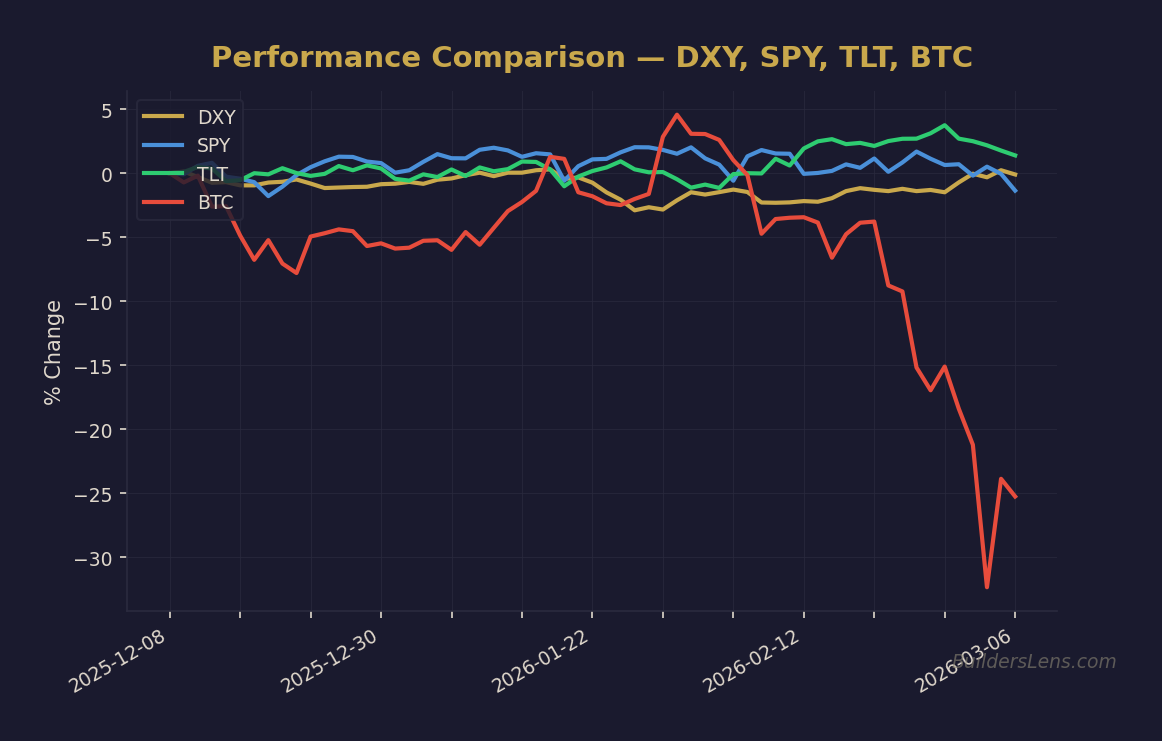
Source: BuildersLens.com Signal Framework | Data as of March 08, 2026
Quick Disclaimer
This content is for educational and informational purposes only. It reflects Our Strategy’s
probability- and sequencing-based macro framework and is not financial advice.
Source Video Reviewed
Asian Currencies Are Sliding — A Late Cycle Funding Signal
Original video referenced:
Global Currencies Doing Something Very Dangerous
Why Currencies Are Leading Interest Rates Again
When dollar funding tightens, currencies move first. Carry trades unwind, cross-border funding
costs rise, and FX markets reprice risk before bond yields or equity indices visibly react.
The current weakness in the yen and won — despite active policy attention — suggests markets
are signaling stress ahead of central bank response.
Eurodollar Stress Goes Global
The synchronized weakness across Asian currencies is not a country-specific issue. It reflects
tightening global dollar liquidity, where offshore dollar demand exceeds supply.
Historically, this type of FX correlation has preceded:
- Rising funding costs
- Pressure on global credit markets
- Higher volatility in risk assets
What This Means for Phase Two Probability
In Our Strategy’s five-phase framework, this signal aligns with late Phase 1
behavior. It does not confirm forced liquidation — but it raises sensitivity and
compresses the timeline if funding stress persists.
Markets Most Sensitive to Funding Stress
- Equities: SPY, especially if breadth narrows
- Duration: TLT, ZROZ if term premium rises
- Emerging Markets: EM FX and EM equities absorb stress first
- Liquidity-beta assets: Bitcoin during dollar funding squeezes
Why This Is Not a Buy Signal
Funding stress signals are risk management signals, not entry signals. They tell us
where fragility is building — not where bottoms form.
Our Strategy response is tighter exit discipline, higher signal weighting on currencies and
credit, and patience for confirmation — not prediction.
Phase Mapping (Process View)
| Horizon | Phase 1 | Phase 2 | Phase 3 | Key Confirm Signal |
|---|---|---|---|---|
| 3 months | High | Low–Moderate | Low | FX stress persistence |
| 6 months | Moderate | Moderate | Low | Credit spreads widen |
| 9 months | Lower | Higher | Moderate | Funding & refinancing stress |
| 12 months | Low | Moderate | Higher | Forced liquidity events |
Bottom Line
Currencies are leading again. Credit is reacting. Policy will follow.
The signal is not about panic — it’s about sequencing. When FX breaks first, markets are
telling you where stress is forming long before headlines catch up.
Generated using a disciplined, signal-first macro framework
Get the Daily Phase Brief
Signal changes, data releases to watch, and today’s regime assessment — delivered every morning before market open.
Join investors tracking the macro cycle. Unsubscribe anytime.
📊 Run Your Own Analysis
Use the BuildersLens 65-Signal Analyzer to see live macro positioning for tickers mentioned in this article:
→ Analyze EEM (Emerging Markets)
This article is for educational and informational purposes only and does not constitute investment advice. Past performance is not indicative of future results. Consult with a qualified financial advisor before making investment decisions.