Research · Uncategorized
Credit Spreads (HY / IG)
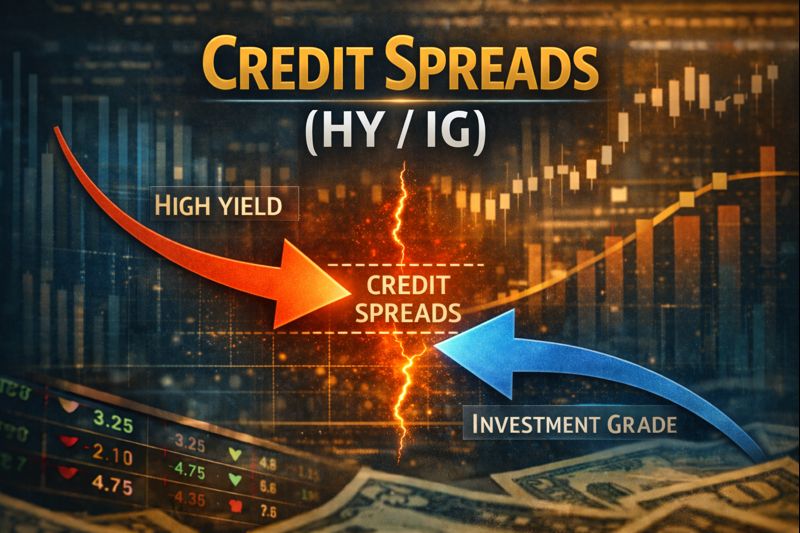
Credit Spreads (High Yield / Investment Grade)
The Signal That Decides Whether Stress Stays Contained or Becomes Systemic
If there is one signal that consistently separates
manageable slowdowns from full-scale financial stress,
it is credit spreads.
Equity markets can rise on optimism.
Economic data can lag reality.
Policy narratives can reassure.
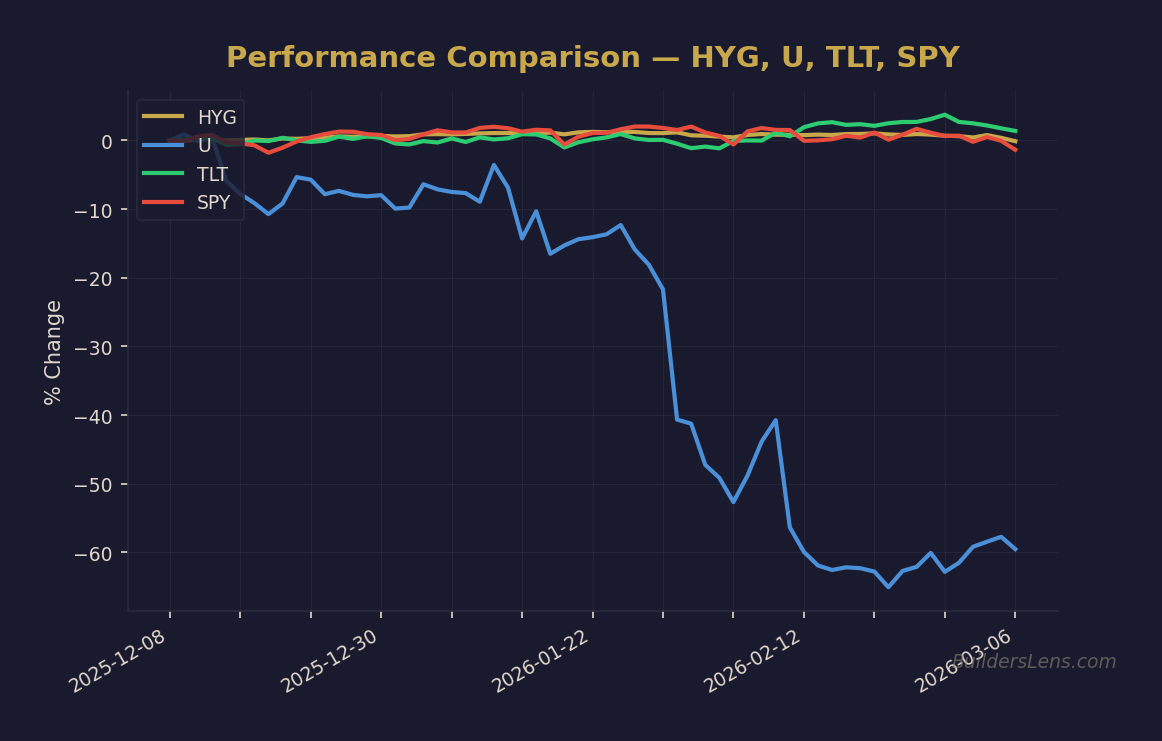
Source: BuildersLens.com Signal Framework | Data as of March 08, 2026
Credit does none of that.
Credit spreads reflect the real price of risk —
and they tend to tell the truth earlier than anything else.
What Are Credit Spreads? (Plain English)
A credit spread measures how much extra yield
investors demand to lend money to corporations
instead of the U.S. government.
In practice, we usually look at:
- Investment Grade (IG) bonds — higher-quality borrowers
- High Yield (HY) bonds — lower-quality, more leveraged borrowers
The spread is the difference between:
- Corporate bond yields
- U.S. Treasury yields
In simple terms:
Credit spreads tell us how nervous lenders are about getting paid back.
Why Credit Spreads Matter More Than Most Indicators
Credit is the lifeblood of the financial system.
Companies can survive falling stock prices.
They cannot survive losing access to funding.
When credit spreads are tight:
- Lending is easy
- Refinancing is available
- Leverage is rewarded
When credit spreads widen:
- Lenders demand protection
- Weak borrowers get shut out
- Refinancing risk rises sharply
This is why credit spreads often move
before equity markets break.
Why Credit Spreads Are the Hard Gate in the Five Phases
Many indicators warn.
Credit spreads decide.
Phase 0 — Post-Crisis Expansion
In Phase 0:
- Credit spreads compress from extreme levels
- Lending confidence improves
- Risk premiums normalize
This is a healing environment for credit.
Phase 1 — Melt-Up / Liquidity Illusion
In Phase 1:
- Credit spreads are often tight
- Risk is underpriced
- Marginal borrowers are still funded
This is where danger quietly builds.
Asset prices may rise even as:
- Loan quality deteriorates
- Covenants weaken
- Duration risk increases
Phase 2 — Crack Formation / Rolling Stress
Phase 2 is defined by selective credit stress.
In this phase:
- High Yield spreads begin to widen
- Investment Grade may still look stable
- Stress appears in weaker sectors first
This is the most important transition zone.
If spreads stabilize, stress can remain contained.
If spreads accelerate, Phase 3 risk rises sharply.
Phase 3 — Forced Liquidation
Phase 3 begins when credit stops functioning normally.
In this phase:
- HY spreads gap wider
- IG spreads follow
- Refinancing windows close
- Non-economic selling emerges
At this point:
The problem is no longer valuation — it is survival.
Policy responses usually arrive after damage is already done.
Phase 4 — Reset / Accumulation
In Phase 4:
- Credit spreads peak and begin to compress
- Defaults slow
- Risk premiums remain elevated
This is where long-term opportunity re-emerges —
even while headlines remain negative.
Where We Are Today
In the current cycle, credit spreads have not yet confirmed
a full transition into Phase 3.
Instead, what we observe is:
- Episodes of High Yield stress
- Relative stability in Investment Grade
- Rising sensitivity to rates and liquidity
In Five Phases terms:
This behavior aligns with late Phase 1 transitioning into early Phase 2 —
where stress is visible but not yet systemic.
This distinction matters.
Without sustained, accelerating spread widening,
the system has not yet crossed the hard gate into Phase 3.
What Credit Spreads Can — and Cannot — Tell Us
Credit spreads answer one critical question:
Are lenders still willing to fund risk?
They cannot:
- Time market bottoms
- Predict policy reactions
- Prevent volatility
But when credit spreads break,
very few other indicators matter.
Final Takeaway
Credit spreads are the backbone of the Five Phases framework.
- They confirm whether stress is contained or systemic
- They determine whether Phase 3 is possible
- They govern survival more than sentiment
In the Five Phases model,
many signals warn —
but credit spreads decide.
Get the Daily Phase Brief
Signal changes, data releases to watch, and today’s regime assessment — delivered every morning before market open.
Join investors tracking the macro cycle. Unsubscribe anytime.
📊 Run Your Own Analysis
Use the BuildersLens 65-Signal Analyzer for live macro positioning:
→ Analyze HYG (High Yield Credit)
This article is for educational and informational purposes only and does not constitute investment advice. Past performance is not indicative of future results. Consult with a qualified financial advisor before making investment decisions.