Research · Cycle Sequencing & Phases
Daily Signal Check — February 24, 2026
Hook: IG Credit Spread at 78 bps, VIX at 19.09
The IG credit spread [BAMLC0A0CM] remains stable at 78 bps, well below the phase transition threshold of 150 bps. Meanwhile, the VIX [VIXCLS] is currently at 19.09, indicating low near-term volatility risk.
Macro Credit Spread Analysis — February 2026
The IG credit spread [BAMLC0A0CM] stands at 78 bps, within the green zone, far from the phase transition threshold of 150 bps. This stability suggests continued liquidity support and a low probability of imminent credit stress. The HY spread [BAMLH0A0HYM2], however, is elevated at 286 bps, indicative of higher risk aversion among investors for lower-quality credits.
The mechanism for this transmission path begins with stable IG spreads signaling that corporations can borrow cheaply and refinance existing debt without significant pressure. This liquidity support keeps credit stress low, supporting the current Phase 1 conditions. However, if IG spreads were to rise above 150 bps and sustain at that level, it would trigger a transition into Phase 2 as refinancing costs for corporate borrowers increase significantly.
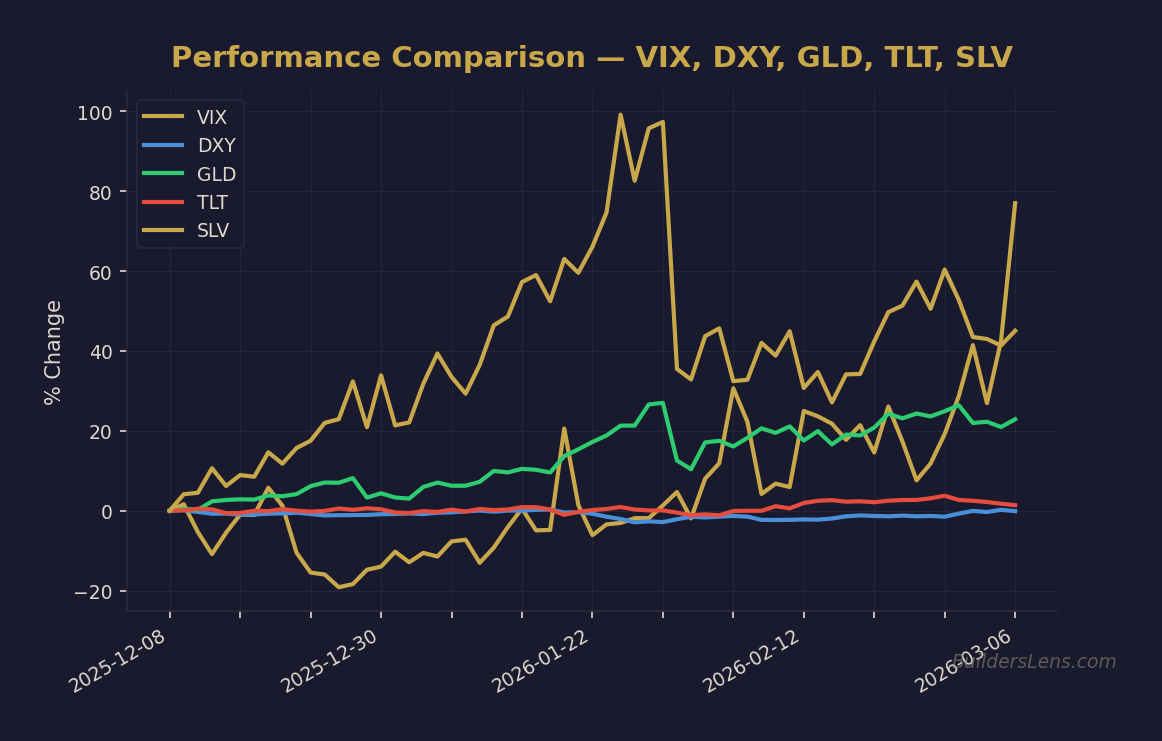
Source: BuildersLens.com Signal Framework | Data as of March 08, 2026
Dollar Funding Stress Mechanism — DXY at 117.99
The DXY [DTWEXBGS] index stands at 117.99, reflecting strong dollar conditions. A strong dollar can exacerbate global funding stress by making dollar-denominated debt more expensive for emerging markets and other non-US borrowers.
This mechanism unfolds as follows: a rising DXY index implies higher demand for the US dollar, which increases borrowing costs for entities with dollar liabilities outside the United States. This heightened cost of capital can lead to refinancing difficulties, defaults, and eventually forced asset sales. Such events can trigger broader market stress if they occur on a large scale.
Volatility Regime Assessment — VIX Signal Analysis
The VIX [VIXCLS] currently stands at 19.09, indicating relatively low near-term volatility risk. This level suggests that the market is not pricing in significant short-term uncertainty or fear.
This low VIX reading supports the continuation of Phase 1 by implying a stable and confident market environment where investors are less likely to engage in defensive moves. If the VIX were to rise above 25, it would signal increased risk aversion and could indicate an impending shift towards multiple compression (Phase 2).
Phase Mapping and Probability Assessment
- Current Regime: We remain in Phase 1 with a 90% probability over the next three months. The IG credit spread [BAMLC0A0CM] is well below the phase transition threshold, supporting continued liquidity support.
- Next Phase Risk: There is a 10% probability of transitioning into Phase 2 over the next six months if IG spreads rise above 150 bps and remain there for more than five consecutive days.
- Tail Risk: A sudden spike in HY defaults could elevate tail risk to 5%, pushing us towards Phase 3 conditions within three months.
Multi-Asset Opportunity Framework — Macro Regime Scores
Gold scores 7.5 out of 10, Cash scores 7.0 out of 10, TLT scores 6.5 out of 10, Silver scores 6.0 out of 10, BTC scores 5.5 out of 10.
The high score for gold reflects its role as a safe haven in volatile times and its potential to appreciate during periods of uncertainty or inflation concerns. Cash maintains a strong score due to the preservation of optionality and the ability to deploy capital opportunistically when conditions warrant.
Historical Analog — Credit Cycle Comparison
Comparing current readings with those from 2006-2007, we observe that IG spreads [BAMLC0A0CM] hovered between 80 and 120 bps for approximately 18 months before the credit crisis. The HY spread [BAMLH0A0HYM2] rose from around 250 to over 600 bps within a year, while the VIX [VIXCLS] remained suppressed at 10-15 before spiking to 80.
Current conditions with IG spreads near 78 bps and HY spreads around 286 bps suggest that while we are not yet in crisis territory, there is a need for close monitoring. The VIX at 19.09 also indicates lower near-term risk compared to the pre-crisis period.
What Changes and What Does Not Change
Changes: We will continue to monitor IG credit spreads closely, as any rise above 150 bps could trigger a transition into Phase 2. Additionally, we will reassess our TLT position if long-term yields show signs of stalling or falling.
Does Not Change: Our core holdings in gold and cash remain unchanged to preserve optionality. We continue to maintain the BTC trigger-driven approach until clear signals warrant a larger allocation.
Invalidation Conditions — Risk Management Thresholds
The current Phase 1 assessment would be invalidated if IG credit spreads [BAMLC0A0CM] rise above 150 bps and remain there for more than five consecutive days. Additionally, sustained VIX levels above 25 for ten consecutive trading days would indicate a shift towards multiple compression (Phase 2).
Get the Daily Phase Brief
Signal changes, data releases to watch, and today’s regime assessment — delivered every morning before market open.
Join investors tracking the macro cycle. Unsubscribe anytime.
📊 Run Your Own Analysis
Use the BuildersLens 65-Signal Analyzer for live macro positioning:
This article is for educational and informational purposes only and does not constitute investment advice. Past performance is not indicative of future results. Consult with a qualified financial advisor before making investment decisions.