Research · Uncategorized
Dalio – Long-Term Debt Cycle
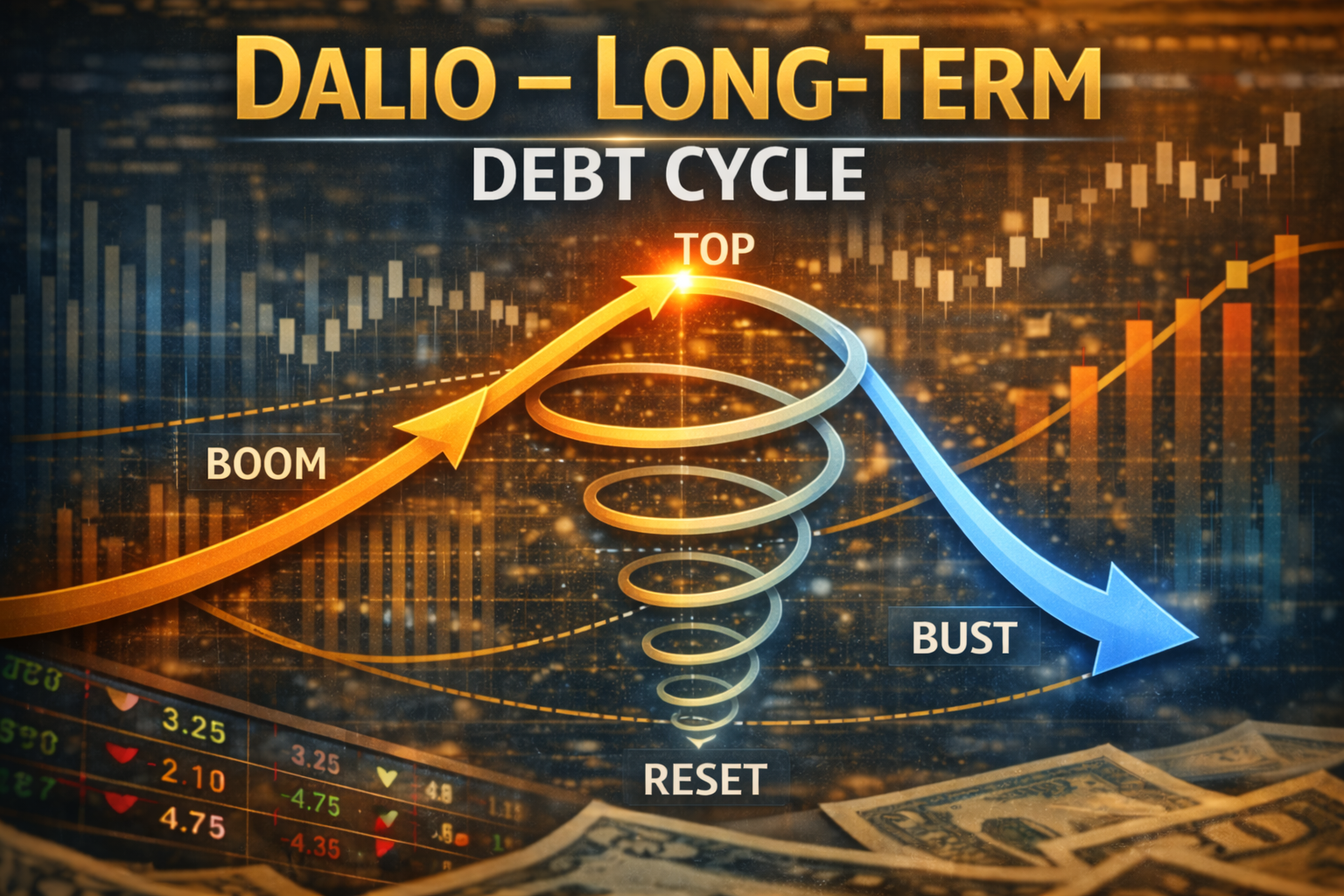
Dalio’s Long-Term Debt Cycle
Why Periodic Resets Are Inevitable in Credit-Based Systems
Ray Dalio’s long-term debt cycle explains something most people sense
but struggle to articulate:
Why debt, policy, and markets eventually reach limits —
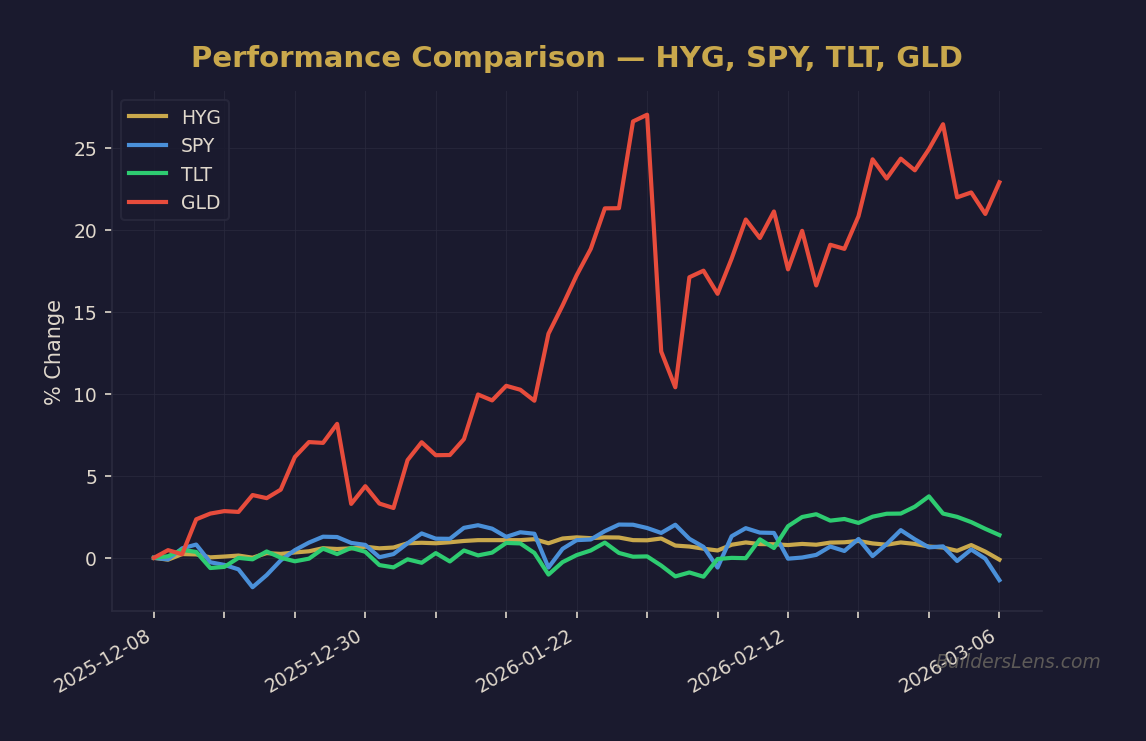
no matter how sophisticated the system becomes.Source: BuildersLens.com Signal Framework | Data as of March 08, 2026
This cycle does not operate over months or years.
It unfolds over decades.
At BuildersLens, we treat the long-term debt cycle as
structural context —
the backdrop that explains why the Five Phases repeat over time.
What Is the Long-Term Debt Cycle? (Plain English)
The long-term debt cycle describes how debt builds faster than income
across many business cycles.
Early on:
- Borrowing supports growth
- Debt feels manageable
- Policy tools are effective
Over time:
- Debt grows faster than productivity
- Interest burdens rise
- Each downturn requires more intervention
Eventually, the system reaches a point where:
Debt can no longer be resolved through normal growth or rate cuts.
Why the Long-Term Debt Cycle Is Different
Unlike the short-term debt cycle, the long-term cycle cannot be managed
with routine policy adjustments.
Over decades:
- Interest rates trend lower
- Debt levels trend higher
- Policy becomes increasingly aggressive
This creates diminishing returns.
Each crisis requires:
- More liquidity
- More debt
- More intervention
Eventually, the tools stop working cleanly.
How the Long-Term Debt Cycle Expresses Itself
Late in the long-term debt cycle, systems rely on:
- Persistent low interest rates
- Balance-sheet expansion
- Financial repression
- Currency debasement risks
These policies delay adjustment —
but they do not eliminate it.
This is why long-term debt cycles end with
some form of reset:
- Debt restructuring
- Inflationary erosion
- Default
- Institutional change
Where the Long-Term Debt Cycle Fits in the Five Phases
The long-term debt cycle does not map to a single phase.
It operates across all of them.
Phase 0 — Post-Crisis Expansion
Phase 0 often follows a partial long-term reset.
- Debt burdens have been reduced
- Confidence in institutions improves
- Policy regains credibility
This is the “clean slate” moment — temporarily.
Phase 1 — Melt-Up / Liquidity Illusion
In Phase 1:
- Debt expands comfortably
- Low rates encourage risk-taking
- Asset inflation substitutes for growth
The long-term debt cycle accelerates quietly here.
Phase 2 — Crack Formation / Rolling Stress
In Phase 2:
- Debt servicing becomes sensitive to rates
- Policy effectiveness begins to decline
- Confidence in long-term solutions weakens
This is where long-term imbalances become visible.
Phase 3 — Forced Liquidation / Policy Loss of Control
Phase 3 often represents a local breaking point
within the long-term debt cycle.
- Liquidity breaks before sentiment
- Policy reacts rather than leads
- Debt structures fail under stress
These moments force recognition of structural limits.
Phase 4 — Reset / Accumulation
Phase 4 is where long-term debt cycles partially resolve.
- Debt is written down or inflated away
- Institutions adapt
- New growth drivers emerge
This sets the foundation for the next multi-decade cycle.
Where We Are Today
Today, many developed economies appear late in their long-term debt cycles.
Common characteristics include:
- Historically high debt-to-GDP ratios
- Long-term reliance on low or negative real rates
- Repeated balance-sheet expansion
In Five Phases terms:
The long-term debt cycle provides the structural backdrop
that makes Phase 1 distortions larger
and Phase 3 resets more consequential.
This does not mean immediate collapse.
It means constraints matter more than narratives.
What the Long-Term Debt Cycle Can — and Cannot — Tell Us
The long-term debt cycle helps answer:
Why does the system periodically require resets?
It cannot:
- Time crises
- Predict specific policy actions
- Replace short-term signals like credit spreads
It is context, not a trigger.
Final Takeaway
Dalio’s long-term debt cycle explains
why debt-based systems cannot expand indefinitely.
- Debt grows faster than income
- Policy becomes less effective over time
- Resets become unavoidable
Within the Five Phases framework,
the long-term debt cycle is the structural reason
why Phase 4 always follows Phase 3 —
eventually.
It does not predict when.
It explains why.
Get the Daily Phase Brief
Signal changes, data releases to watch, and today’s regime assessment — delivered every morning before market open.
Join investors tracking the macro cycle. Unsubscribe anytime.
📊 Run Your Own Analysis
Use the BuildersLens 65-Signal Analyzer for live macro positioning:
→ Analyze HYG (High Yield Credit)
This article is for educational and informational purposes only and does not constitute investment advice. Past performance is not indicative of future results. Consult with a qualified financial advisor before making investment decisions.