Research · Uncategorized
Dalio – Short-Term Debt Cycle
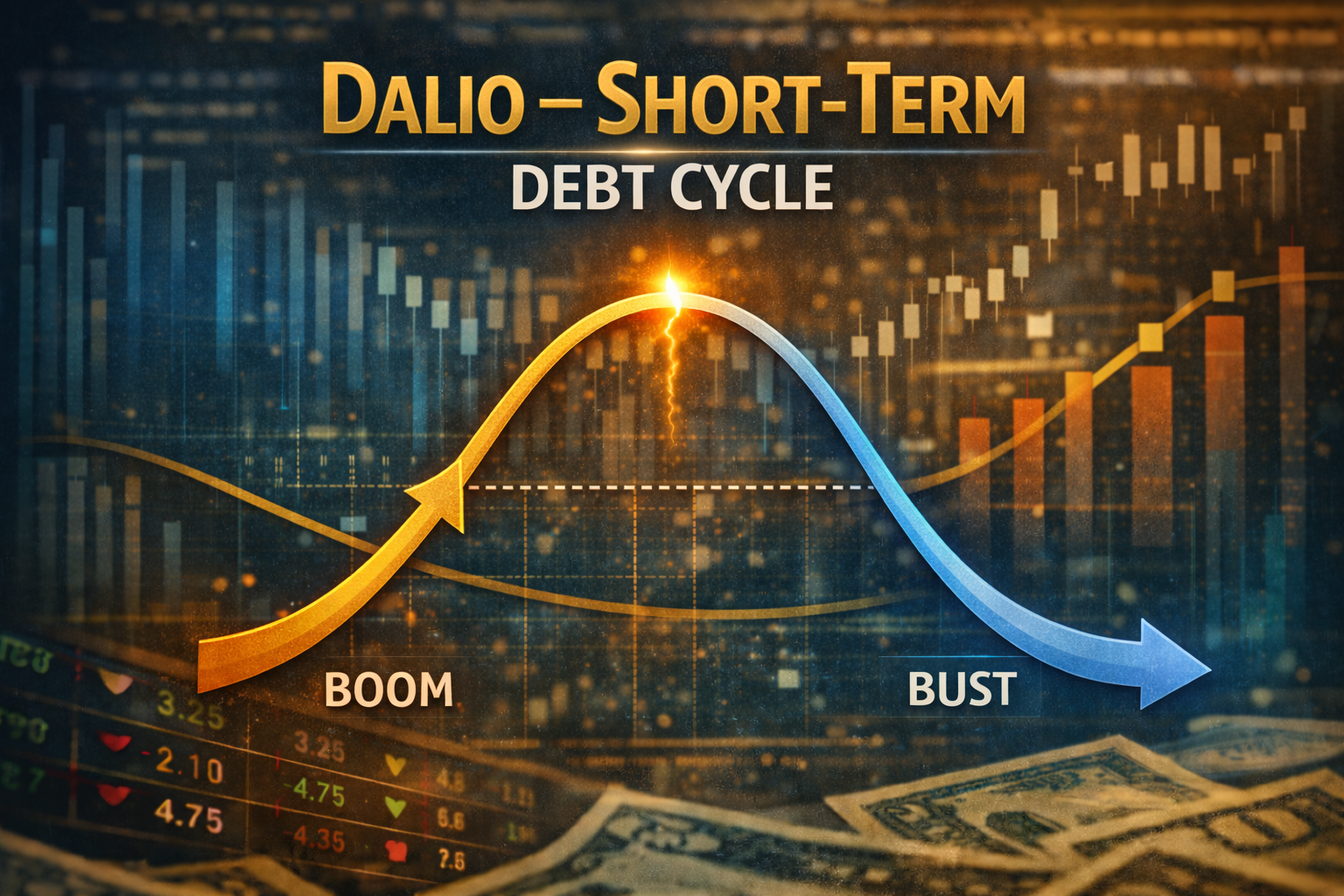
Dalio’s Short-Term Debt Cycle
How Leverage Builds, Breaks, and Resets Within the Five Phases
Ray Dalio’s short-term debt cycle is one of the most important frameworks
for understanding how modern economies actually move.
It explains why expansions feel stable — until they suddenly don’t —
and why downturns often accelerate faster than expected.
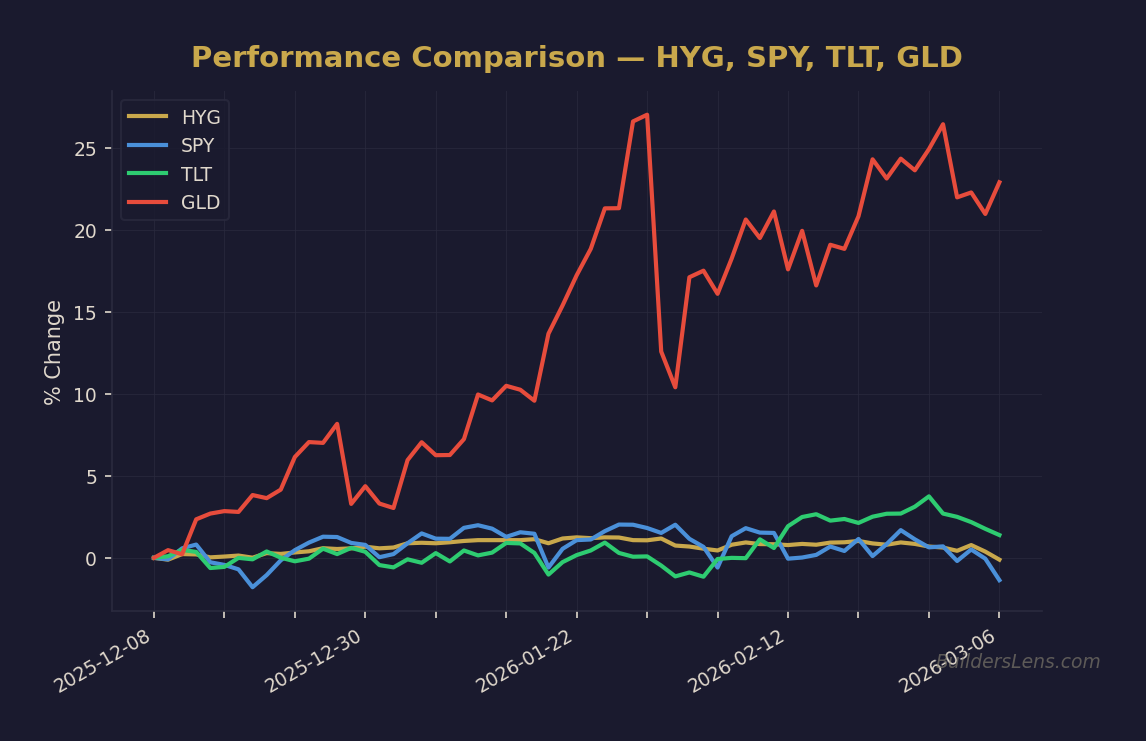
Source: BuildersLens.com Signal Framework | Data as of March 08, 2026
At BuildersLens, we treat the short-term debt cycle not as a prediction tool,
but as a mechanism that plays out repeatedly inside
our Five Phases macro framework.
What Is the Short-Term Debt Cycle? (Plain English)
The short-term debt cycle describes how borrowing and spending
rise and fall over the course of a typical business cycle.
In simple terms:
When borrowing is easy, spending increases.
When borrowing tightens, spending slows.
This cycle usually lasts several years
and is heavily influenced by interest rates, credit availability,
and central bank policy.
How the Cycle Actually Works
The short-term debt cycle unfolds in a familiar pattern:
- Credit expands
- Spending increases
- Income and asset prices rise
- Leverage builds
- Inflation or financial stress emerges
- Policy tightens
- Credit contracts
What makes this cycle unstable is leverage.
Debt amplifies both the upside and the downside.
When conditions change, adjustments happen quickly.
Why the Short-Term Debt Cycle Matters So Much
Economic growth does not move smoothly.
It moves in waves driven by credit.
The short-term debt cycle explains:
- Why expansions overshoot
- Why tightening often comes too late
- Why downturns feel sudden
This is not because policymakers are careless —
it is because leverage accumulates quietly.
Where the Short-Term Debt Cycle Fits in the Five Phases
Phase 0 — Post-Crisis Expansion
In Phase 0:
- Debt levels have been reduced
- Balance sheets are healthier
- Credit expands cautiously
This is the early, constructive part of the debt cycle.
Phase 1 — Melt-Up / Liquidity Illusion
Phase 1 is where the short-term debt cycle accelerates.
In this phase:
- Borrowing feels easy
- Risk is rewarded
- Leverage builds across households and corporations
Asset prices rise faster than incomes.
Confidence increases.
This is the most deceptive part of the cycle.
Phase 2 — Crack Formation / Rolling Stress
As leverage peaks, cracks begin to form.
In Phase 2:
- Interest rates become restrictive
- Refinancing gets harder
- Cash flow pressure emerges
The debt cycle begins to turn —
but not evenly.
Strong borrowers survive.
Weak borrowers struggle.
Phase 3 — Forced Liquidation
Phase 3 is where the short-term debt cycle breaks.
In this phase:
- Debt can no longer be serviced normally
- Assets are sold to meet obligations
- Leverage unwinds rapidly
This is not about confidence.
It is about cash flow.
When debt cannot be rolled, it must be repaid — or liquidated.
Phase 4 — Reset / Accumulation
In Phase 4:
- Debt burdens are reduced
- Defaults slow
- New lending standards emerge
The short-term debt cycle resets —
setting the stage for the next expansion.
Where We Are Today
In the current environment, the short-term debt cycle
appears late and strained.
Key characteristics include:
- High levels of corporate and government leverage
- Elevated refinancing sensitivity to rates
- Increasing divergence between strong and weak balance sheets
In Five Phases terms:
This aligns with late Phase 1 transitioning into Phase 2 —
where debt is still outstanding, but no longer expanding cleanly.
The risk going forward is not whether debt exists —
but whether it can continue to be rolled.
What the Short-Term Debt Cycle Can — and Cannot — Tell Us
The short-term debt cycle helps answer:
Is leverage expanding or contracting?
It cannot:
- Time market peaks
- Override credit spread signals
- Prevent forced liquidation once it begins
It is a structural explanation —
not a trading signal.
Final Takeaway
Dalio’s short-term debt cycle explains
why expansions feel stable until they suddenly aren’t.
- Leverage builds quietly
- Tightening exposes fragility
- Deleveraging happens faster than expected
Within the Five Phases framework,
the short-term debt cycle is the engine
that drives movement from growth to stress.
It does not predict the future —
it explains the present.
Get the Daily Phase Brief
Signal changes, data releases to watch, and today’s regime assessment — delivered every morning before market open.
Join investors tracking the macro cycle. Unsubscribe anytime.
📊 Run Your Own Analysis
Use the BuildersLens 65-Signal Analyzer for live macro positioning:
→ Analyze HYG (High Yield Credit)
This article is for educational and informational purposes only and does not constitute investment advice. Past performance is not indicative of future results. Consult with a qualified financial advisor before making investment decisions.