Research · Rates & Yield Curves
Japan’s Rising Yields and the Hidden U.S. Risk Link

Japan’s Rising Yields and the Hidden U.S. Transmission Channel
This is not a political story. It is a funding story.
Japan’s post-election yield spike matters because Japan has been one of the foundational funding anchors of the global financial system for decades. When the cost of money changes at an anchor point, positioning changes globally. The mechanism matters more than the headline.
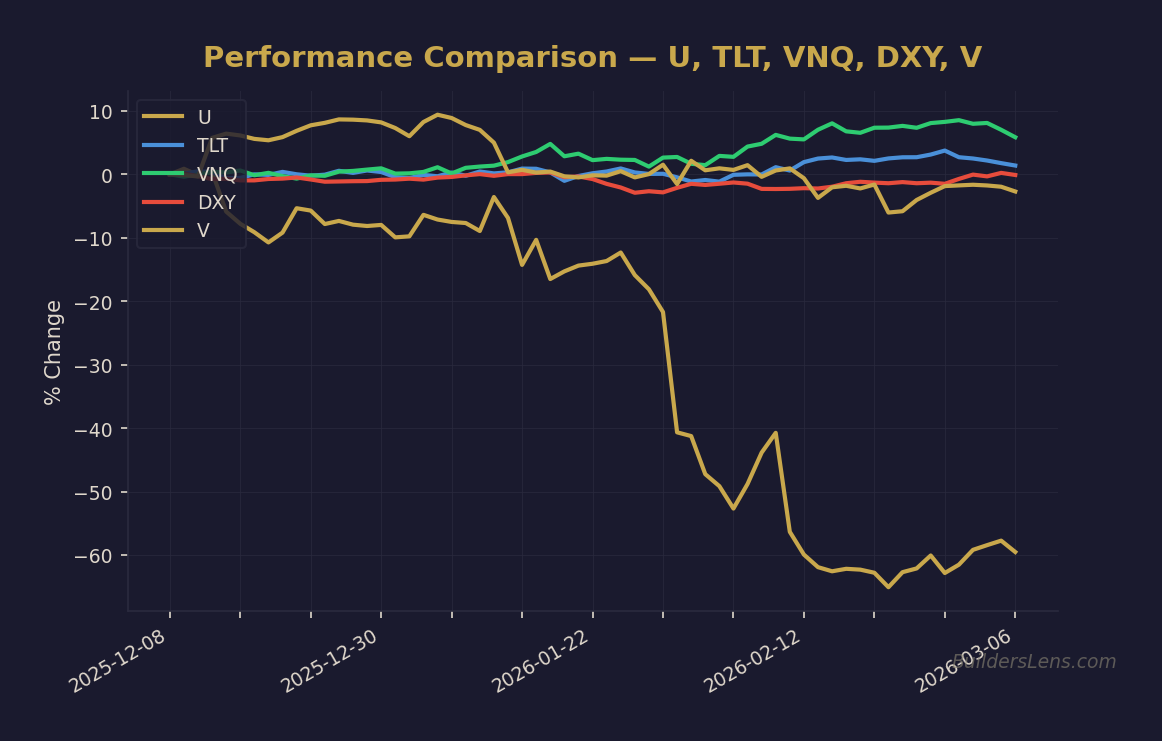
Source: BuildersLens.com Signal Framework | Data as of March 08, 2026
Our Strategy prioritizes mechanisms over narratives, signals over outcomes, sequencing over timing, and probabilities over conviction. Through that lens, Japan’s yield reset is not a prediction of crisis. It is a potential shift in liquidity regime.
The Core Mechanism: The Yen Carry Trade
For decades, Japanese interest rates remained near zero. That created a structural incentive: borrow cheaply in yen, convert to dollars, and purchase higher-yielding assets such as U.S. Treasuries, U.S. credit, and U.S. equities.
This structure is known as the carry trade. It depends on spread. As long as Japanese funding costs remain materially below U.S. yields, and hedging costs are manageable, the trade remains attractive.
When Japanese yields rise, the spread compresses. The trade does not need to collapse to matter. It only needs to become less attractive at the margin. Marginal positioning drives price.
Transmission Channel One: Private Repositioning
If yen funding becomes more expensive, leveraged exposure to duration-sensitive U.S. assets becomes less compelling. That pressure typically appears first in:
- High multiple growth equities
- Long-duration technology stocks
- Highly levered real estate exposure
- Speculative credit
This is not because fundamentals change overnight. It is because discount rates matter. When funding costs rise, valuation sensitivity increases.
Transmission Channel Two: Sovereign Balance Sheet Dynamics
Japan holds one of the largest foreign reserve stockpiles globally. It is a major holder of U.S. Treasuries.
Markets do not require aggressive selling to reprice risk. They only require uncertainty around incremental demand. When a large foreign holder faces higher domestic yields, capital allocation preferences can shift.
That shift affects term premium. And term premium instability is often the overlooked driver of volatility in late-cycle environments.
Why This Matters More in a Late-Cycle Regime
In early-cycle expansions, rising yields are often absorbed by growth momentum. In late-cycle conditions, higher yields tighten financial conditions into slowing growth.
The distinction matters.
Our Strategy does not frame this as an imminent crisis. We frame it as Phase Pressure.
Cycle Sequencing and Phase Mapping
Current Phase: Late Phase One
Markets remain resilient on the surface. Underneath, duration sensitivity and credit fragility are increasing. Liquidity remains functional but less forgiving.
Next Phase: Phase Two Risk
If Japanese yields remain elevated and the yen strengthens meaningfully, Phase Two pressure increases. This phase is characterized by:
- Multiple compression
- Credit spread widening
- Volatility clustering
- Weaker market breadth
Further Out: Phase Three Possibility
Only if funding stress broadens into credit mechanics and forced deleveraging do we transition into Phase Three, where policy response becomes dominant.
Date-Anchored Probability Outlook
- Through mid twenty twenty six: approximately sixty percent probability of continued late Phase One behavior.
- By year-end twenty twenty six: approximately thirty percent probability of Phase Two escalation driven by funding and duration stress.
- Into mid twenty twenty seven: approximately twenty percent probability of Phase Three policy-dominant dynamics if credit transmission intensifies.
These are conditional probabilities based on current signals. They are not predictions.
What to Watch: Confirmation vs. Invalidation
Confirmation Signals
- Sustained elevation in Japanese long-term yields
- Persistent yen strengthening consistent with repatriation
- Sticky U.S. long-end yields despite slowing growth
- Widening credit spreads
- Deteriorating market breadth
Invalidation Signals
- Stabilization or decline in Japanese yields
- Renewed yen weakness
- Clean U.S. Treasury auctions with compressing term premium
- Contained credit spreads
Dollar and Foreign Exchange Considerations
The yen is not simply a currency variable. It is a funding barometer.
A strengthening yen can indicate repatriation pressure. A weakening yen suggests continued external deployment of capital.
Dollar strength in this environment tightens global liquidity, particularly for emerging markets and leveraged balance sheets.
Risk and Optionality
When funding conditions tighten, correlations rise. When correlations rise, optionality gains value.
This is why Our Strategy emphasizes sequencing rather than reaction. Decisions made during forced-liquidity windows are rarely optimal. Positioning before liquidity discontinuities preserves flexibility.
What Changes vs. What Does Not
What Changes
- Probability of duration volatility increases
- Carry economics become less forgiving
- Markets become more sensitive to marginal buyers
What Does Not Change
- This is not an automatic crash signal
- Credit confirmation is required for escalation
- Liquidity still dictates timing
Category Classification
Primary: Rates and Yield Curves
Secondary: Credit and Liquidity, Dollar and Foreign Exchange, Cycle Sequencing and Phases
Supporting: Risk and Optionality, Market Internals, Narrative Translation, Macro Regime
Educational Disclaimer
This research is provided for informational and educational purposes only. It reflects a probability-based macro framework and is not investment advice or a recommendation to buy or sell any security.
For additional macro framework research, visit BuildersLens. Supported by V6D.
Get the Daily Phase Brief
Signal changes, data releases to watch, and today’s regime assessment — delivered every morning before market open.
Join investors tracking the macro cycle. Unsubscribe anytime.
📊 Run Your Own Analysis
Use the BuildersLens 65-Signal Analyzer for live macro positioning:
→ Analyze HYG (High Yield Credit)
This article is for educational and informational purposes only and does not constitute investment advice. Past performance is not indicative of future results. Consult with a qualified financial advisor before making investment decisions.