Research · Market Internals
Markets Near Highs, But Institutions Are Selling — A Late Cycle Signal
Markets Near Highs, But Institutions Are Selling — A Late Cycle Signal
Markets were close to all-time highs, oil prices were falling, earnings were strong — and yet price sold off sharply.
In this episode of Independent by Design – The Builders Lens, we break down what that disconnect means
through Our Strategy framework.
This is not a crash call. It’s a discussion about probabilities, sequencing, and late-cycle fragility.
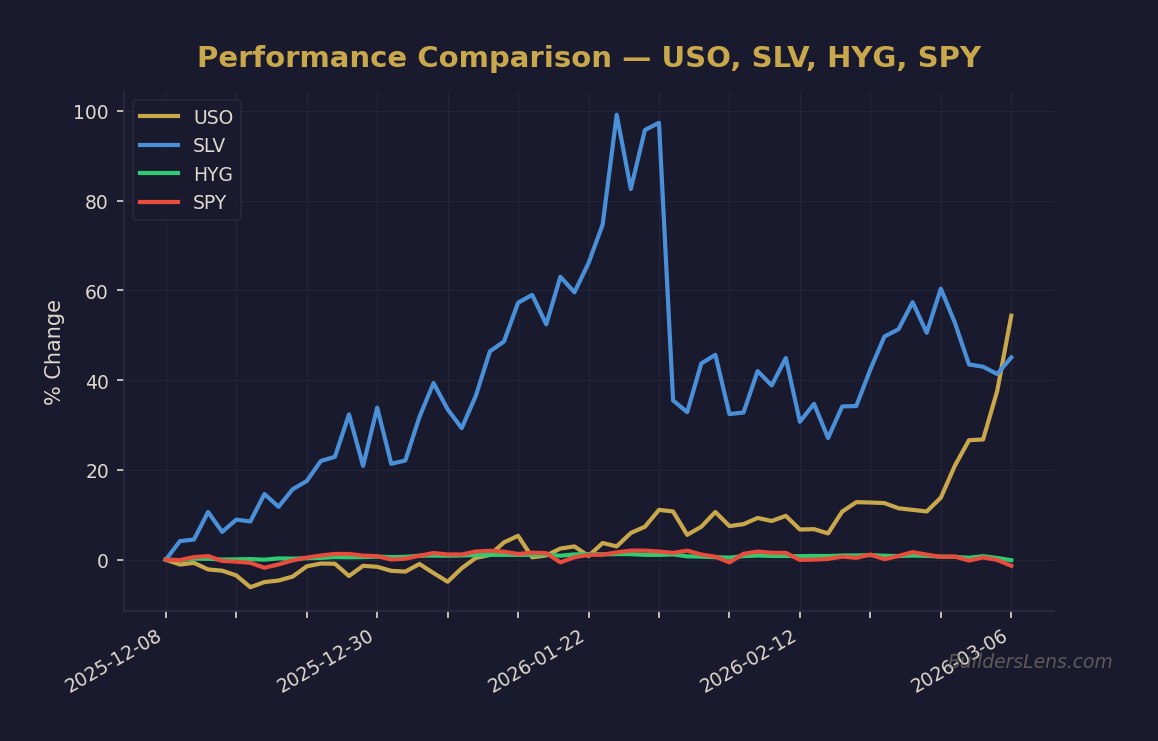
Source: BuildersLens.com Signal Framework | Data as of March 08, 2026
What This Episode Covers
- Why markets can fall on objectively good news
- Retail buying versus institutional selling behavior
- Late-cycle melt-up versus multiple-compression risk
- Silver volatility as a stress signal
- What changes — and what does not — in disciplined risk management
Key Takeaways
Market Reaction Matters More Than News
When markets reject positive headlines — strong earnings, easing inflation, geopolitical calm —
the reaction itself becomes the signal. Late-cycle markets often fail not because news turns negative,
but because positioning and liquidity are already stretched.
Retail vs. Institutional Behavior
Retail participation tends to surge near resistance, while institutions quietly sell into strength.
This divergence increases fragility, especially when price fails to confirm optimistic narratives.
Volatility as a Stress Signal
Silver’s sharp drop is not a bearish macro call by itself. Instead, it reflects volatility entering
crowded trades — often one of the earliest expressions of late-cycle instability.
Phase Mapping — Our Strategy Framework
Within Our Strategy’s five-phase cycle, this setup aligns with
late Phase One behavior.
- Phase One: Markets can continue higher, but internal cracks begin to appear
- Current Signal: Institutional selling into strength raises fragility
- Phase Two Probability: Nudges modestly higher if rejections persist
- Not Phase Three: No forced liquidity event without credit or funding confirmation
This environment favors tighter exits, smaller sizing near resistance, slower deployment,
and managing strength rather than chasing it.
What Changes — And What Does Not
What Changes
- Tighter exit discipline
- Reduced exposure near resistance
- Greater sensitivity to volatility and positioning
What Does Not Change
- No crash predictions from divergences alone
- Phase Three requires credit and funding confirmation
- Tranche discipline remains non-negotiable
Original Video Reviewed
Wall Street Is Selling — StockedUp
This content is for educational purposes only and is not financial advice.
Get the Daily Phase Brief
Signal changes, data releases to watch, and today’s regime assessment — delivered every morning before market open.
Join investors tracking the macro cycle. Unsubscribe anytime.
📊 Run Your Own Analysis
Use the BuildersLens 65-Signal Analyzer for live macro positioning:
This article is for educational and informational purposes only and does not constitute investment advice. Past performance is not indicative of future results. Consult with a qualified financial advisor before making investment decisions.