Research · Cycle Sequencing & Phases
Markets Surge, But Positioning Signals Late-Cycle Fragility
In Our Strategy, we do not interpret market strength and risk signals as mutually exclusive.
Late-cycle environments are often defined by precisely this tension: strong price action alongside
growing structural fragility beneath the surface.
The recent session that added more than one trillion dollars to U.S. equity market capitalization,
pushing major indexes to new highs, fits squarely into this pattern. Price moved forcefully higher,
led by AI-linked semiconductors, even as insider selling, hedge fund short exposure, geopolitical
uncertainty, and macro event risk all rose simultaneously.
What the Market Move Actually Represented
The rally was not driven by a sudden improvement in macro fundamentals. Instead, it was driven by
positioning, sentiment release, and narrative relief.
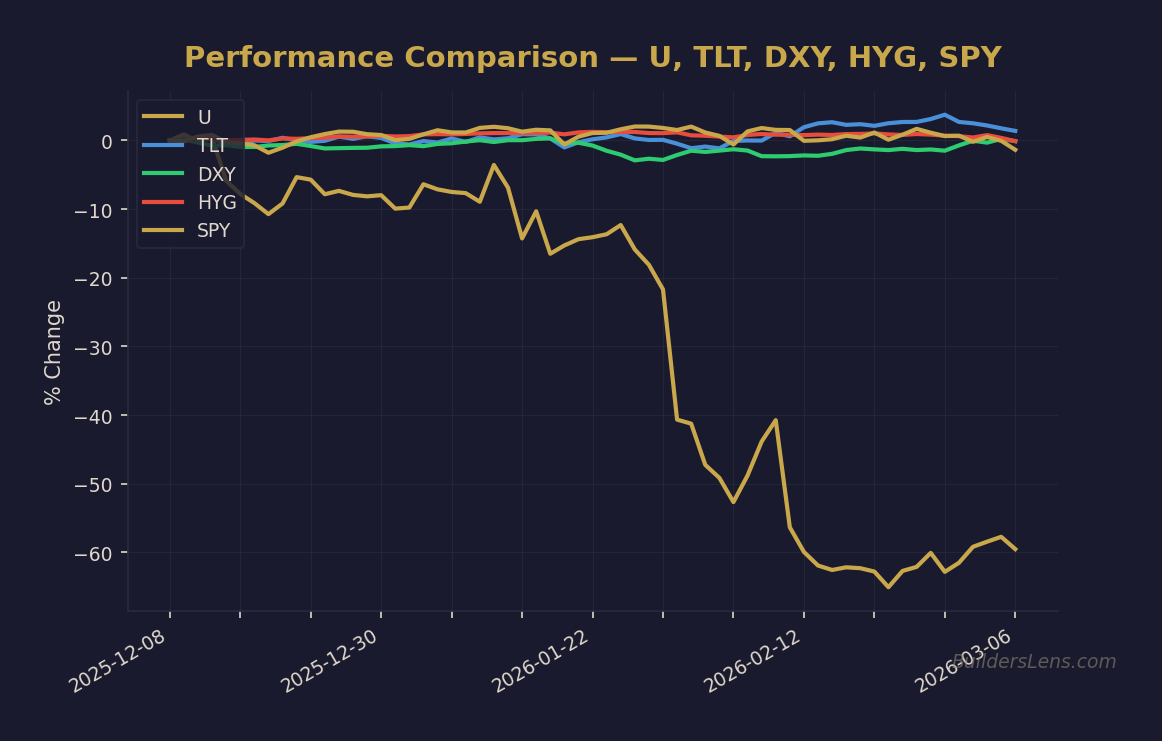
Source: BuildersLens.com Signal Framework | Data as of March 08, 2026
Reassurance around AI capital expenditure sustainability eased a dominant fear that had been
pressuring markets. That relief mattered because positioning had already become stretched. When
fear subsides in a crowded environment, price can move very quickly.
In Our Strategy, this is a classic late-cycle dynamic. Positioning and liquidity can overpower
structural risk for longer than expected, but that same process increases asymmetry later.
Signal Classification Within Our Strategy
- Positioning and sentiment: Record hedge fund shorting and sharp short-covering risk.
- Insider behavior: Near-universal insider selling across major issuers.
- Liquidity impulse: Strong short-term momentum without evidence of renewed liquidity acceleration.
- Labor: Upcoming employment data following earlier signs of labor softening beneath headline strength.
- Rates and inflation: CPI risk as a volatility catalyst rather than a phase-defining event.
- Geopolitics: Iran-related uncertainty acting as a tail-risk amplifier rather than a primary driver.
The Transmission Mechanism: Why Risk Can Build During Rallies
Our Strategy emphasizes mechanism over narrative. Here is the sequence that matters.
When markets rally on positioning relief rather than fresh liquidity or earnings acceleration,
risk does not disappear. It is deferred. Insider selling and hedge fund shorting do not immediately
stop rallies because neither directly controls marginal price in the short term.
Price is driven by liquidity, dealer positioning, and forced flows. Structural risks such as labor
deterioration, credit stress, and funding pressure tend to transmit with a delay. This delay is
why late-cycle rallies often feel confusing and contradictory.
In practical terms, this means markets can move higher even as fragility increases. That is not a
bullish resolution. It is a compression phase.
Phase Mapping: Where This Fits in the Cycle
Within Our Strategy’s five-phase framework, the current signal cluster aligns most closely with
Phase One: Melt-Up Participation With Rising Fragility.
This phase is characterized by:
- Strong price action driven by momentum and positioning
- Narrow or rotational leadership rather than broad participation
- Risk signals appearing without immediate transmission into price
Importantly, this does not yet confirm Phase Two or Phase Three dynamics. Forced liquidity events
require confirmation through credit, funding, or labor transmission. Those signals are not fully
present yet, but their probability is rising.
Probability Calibration and Timeline Framing
Our Strategy frames outcomes in probabilities, not predictions.
Next three months:
- Phase One continuation with choppy upside: approximately 50 to 60 percent
- Corrective volatility without systemic stress: approximately 25 to 35 percent
- Early Phase Two transition: approximately 10 to 15 percent
Next six months:
- Late-cycle compression with rising fragility: approximately 40 to 45 percent
- Phase Two forced-liquidity window: approximately 35 to 45 percent
- Clean re-acceleration: low probability, approximately 10 to 15 percent
Next twelve months:
The dominant probability band remains a Phase Two to Phase Three sequence, involving stress,
repricing, and eventual policy response. Melt-up extensions remain possible, but increasingly
asymmetric.
What Would Raise or Lower Risk Probabilities
Signals that would raise Phase Two probability:
- Sustained labor market deterioration rather than isolated prints
- Widening credit spreads or tightening lending standards
- Funding stress or weak Treasury auction outcomes
- Geopolitical shocks that transmit into energy or dollar funding
Signals that would lower near-term risk:
- Broadening equity participation beyond narrow leadership
- Contained credit spreads despite volatility
- Stable yields alongside easing inflation pressures
What Changes in Our Strategy
Late-cycle rallies do not call for aggression. They call for discipline.
- Exit criteria tighten during extensions
- Participation remains selective rather than broad
- Optionality is preserved for future forced-liquidity windows
What Does Not Change
- We do not fade strength simply because insiders are selling
- We do not call market tops without confirmation
- We do not abandon frameworks due to short-term momentum
- Cash remains strategic optionality, not a failure state
Signals We Are Monitoring Closely
- Equity breadth relative to index highs
- Credit spreads and refinancing conditions
- Labor trend persistence rather than headline noise
- Yield behavior following inflation data
- Energy and dollar response to geopolitical developments
Invalidation Conditions
- Sustained broad market participation that absorbs volatility
- Material easing of credit stress indicators
- Re-acceleration in labor demand without policy distortion
- Volatility compression alongside rising issuance
Our Strategy does not require being early. It requires avoiding being late.
Late-cycle rallies are survivable when approached with discipline, sequencing,
and respect for asymmetry.
Get the Daily Phase Brief
Signal changes, data releases to watch, and today’s regime assessment — delivered every morning before market open.
Join investors tracking the macro cycle. Unsubscribe anytime.
📊 Run Your Own Analysis
Use the BuildersLens 65-Signal Analyzer for live macro positioning:
→ Analyze HYG (High Yield Credit)
→ Analyze DXY (US Dollar Index)
This article is for educational and informational purposes only and does not constitute investment advice. Past performance is not indicative of future results. Consult with a qualified financial advisor before making investment decisions.