Research · Narrative Translation
Nothing Stops the Train: Lyn Alden on Fiscal Dominance, AI, and the Global Economy
Nothing Stops the Train: Understanding Fiscal Dominance
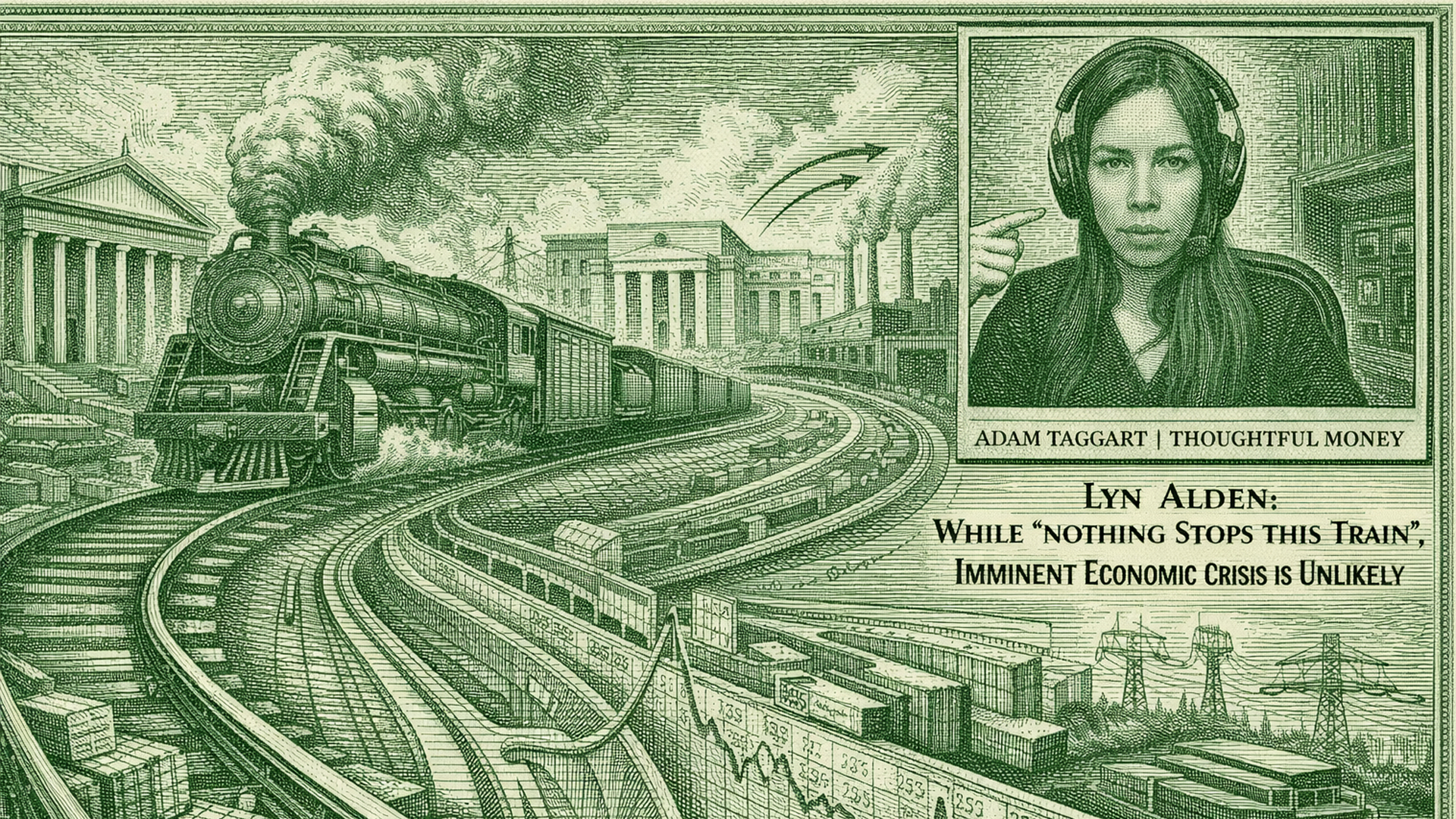
In this conversation with Adam Taggart, macro strategist Lyn Alden explains one of the most misunderstood ideas in modern macroeconomics: the concept that “nothing stops the train.”
At first glance, the phrase sounds ominous, as if it predicts an imminent financial collapse. But the core idea is actually more nuanced. The train metaphor describes a financial system that continues moving forward even as structural imbalances grow beneath the surface.
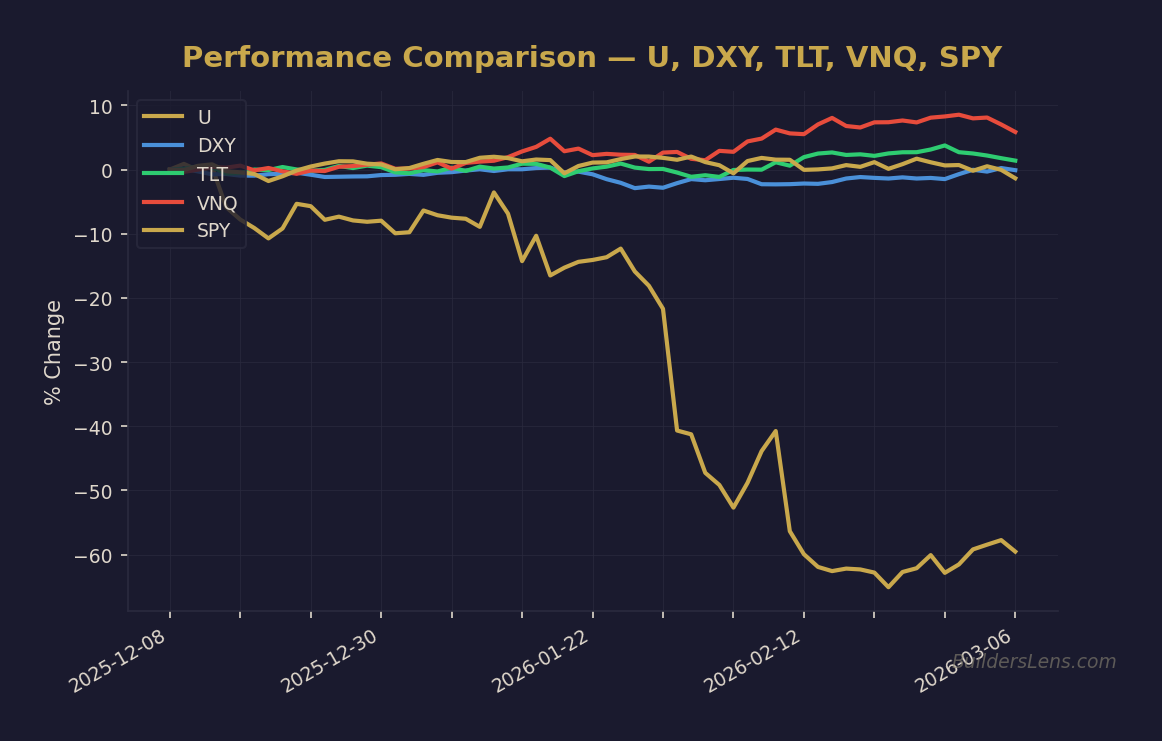
Our Strategy interprets this as a long transitional regime rather than a sudden endpoint. The system is unlikely to achieve a clean fiscal reset, yet it is also unlikely to collapse immediately. Instead, the most probable outcome is a prolonged middle phase where deficits remain large, inflation dynamics stay messy, and markets evolve gradually rather than catastrophically.
Source: BuildersLens.com Signal Framework | Data as of March 08, 2026
The Gray Zone Between Stability and Crisis
Much of today’s macro debate assumes a binary outcome. Either governments successfully control deficits and restore balance, or the system spirals into an immediate crisis. Lyn Alden argues that both extremes are relatively low probability over an investable time horizon.
Instead, economies can remain in a prolonged gray zone where fiscal deficits remain structurally high, but financial systems continue to function.
This middle regime produces several visible consequences:
- Persistent fiscal deficits become normalized.
- Inflation remains uneven across sectors.
- Asset prices rise faster than wages in many regions.
- Political polarization increases as economic outcomes diverge.
Rather than a single collapse event, the system experiences periodic mini-crises that appear, get resolved, and later reappear in new forms.
Why Deficits Continue to Expand
Fiscal dominance occurs when government spending becomes the primary driver of economic growth. In this regime, deficits themselves contribute to headline economic expansion because government spending directly increases GDP.
This creates a feedback loop:
- Government deficits increase spending.
- Spending supports economic growth.
- Growth reduces the urgency for fiscal reform.
- Deficits continue expanding.
Over time, this dynamic allows fiscal imbalances to persist much longer than traditional economic models predict.
Inflation: Money Growth Versus Productivity
Inflation is often misunderstood as purely a monetary phenomenon. In reality, price behavior reflects the interaction between two forces:
- Money supply growth
- Productivity growth
If money supply grows faster than productivity, prices rise over time. If productivity improves significantly, it can offset some of that monetary expansion.
This interaction helps explain why inflation can remain relatively moderate even during periods of aggressive monetary expansion. Productivity improvements allow economies to produce goods and services more efficiently, partially absorbing the inflationary impact of new money creation.
However, these improvements rarely occur evenly across sectors, which is why some prices fall while others rise dramatically.
The Reserve Currency Feedback Loop
Another structural factor supporting the current system is the global role of the U.S. dollar.
Because the dollar functions as the world’s primary reserve currency, global trade requires large amounts of dollar liquidity. One of the main mechanisms that supplies those dollars is the U.S. trade deficit.
When the United States imports more goods than it exports, dollars flow outward into the global economy. Those dollars are then recycled back into U.S. financial markets through investments in Treasury bonds, equities, and real estate.
This cycle produces several long-term effects:
- Strong demand for U.S. financial assets
- Higher asset valuations
- A structurally strong currency
- Reduced competitiveness for domestic manufacturing
While beneficial for asset markets, this structure can create economic imbalances over time.
Artificial Intelligence as a Productivity Offset
Artificial intelligence has emerged as a potential productivity engine that could extend the life of the current financial system.
AI tools can dramatically increase efficiency in white-collar industries by automating repetitive tasks and accelerating research, analysis, and production processes.
However, AI does not function as an unlimited solution. Its expansion is constrained by physical infrastructure, particularly electricity production and semiconductor manufacturing.
Large AI systems require enormous data centers, which depend on reliable energy infrastructure. As a result, the pace of AI expansion may depend more on power generation and grid investment than on software development alone.
The Hidden Role of Energy Infrastructure
Energy production may be the most underappreciated variable in the global economic system.
Modern computing, AI training, industrial manufacturing, and transportation networks all depend on stable energy supply.
Countries that expand electricity production and energy infrastructure may gain significant economic advantages in the coming decades. Conversely, regions that face energy bottlenecks could see slower growth regardless of technological innovation.
Why Market Leadership May Be Rotating
For more than a decade, large technology companies dominated equity markets through scalable software platforms and powerful network effects.
However, the AI era requires far more physical infrastructure than the previous generation of internet platforms. Data centers, semiconductors, cooling systems, and electricity networks all require significant capital investment.
This shift may redirect capital toward sectors that were previously overlooked, including:
- Energy producers
- Industrial equipment manufacturers
- Commodity suppliers
- Infrastructure companies
Rather than replacing technology leadership entirely, the next cycle may broaden market participation across a wider range of industries.
Phase Sequencing: A Slow Evolution Rather Than a Collapse
Our Strategy interprets the current macro environment as part of a longer transition phase rather than an imminent systemic breakdown.
Financial systems often evolve through a sequence of stages:
- Expansion supported by monetary stimulus
- Structural imbalances accumulate
- Periodic disruptions occur
- Policy responses stabilize markets
- The cycle repeats
This pattern can continue for decades before a major restructuring occurs.
Key Signals to Monitor
Rather than focusing on predictions, investors can watch for signals that indicate rising systemic pressure.
- Credit spreads widening
- Liquidity stress in funding markets
- Rising geopolitical fragmentation
- Energy supply constraints
- Structural shifts in global trade flows
These indicators often reveal underlying instability long before a visible crisis emerges.
Final Thoughts
The phrase “nothing stops the train” does not imply that the system is stable or healthy. Instead, it describes a system capable of continuing forward even while structural imbalances accumulate beneath the surface.
For investors and observers, the most valuable approach is not predicting the exact moment of crisis. It is understanding the mechanisms that shape each phase of the economic cycle.
By focusing on signals rather than narratives, it becomes easier to recognize when conditions are stabilizing, when pressure is building, and when structural change may finally occur.
Disclaimer
This content is for educational purposes only and should not be considered financial or investment advice.
📊 Run Your Own Analysis
Use the BuildersLens 65-Signal Analyzer to see live macro positioning for tickers mentioned in this article:
→ Analyze TLT (Long-Term Treasuries)
→ Analyze HYG (High Yield Credit)
This article is for educational and informational purposes only and does not constitute investment advice. Past performance is not indicative of future results. Consult with a qualified financial advisor before making investment decisions.