Research · Narrative Translation
The Three Forces Quietly Holding the Economy Up
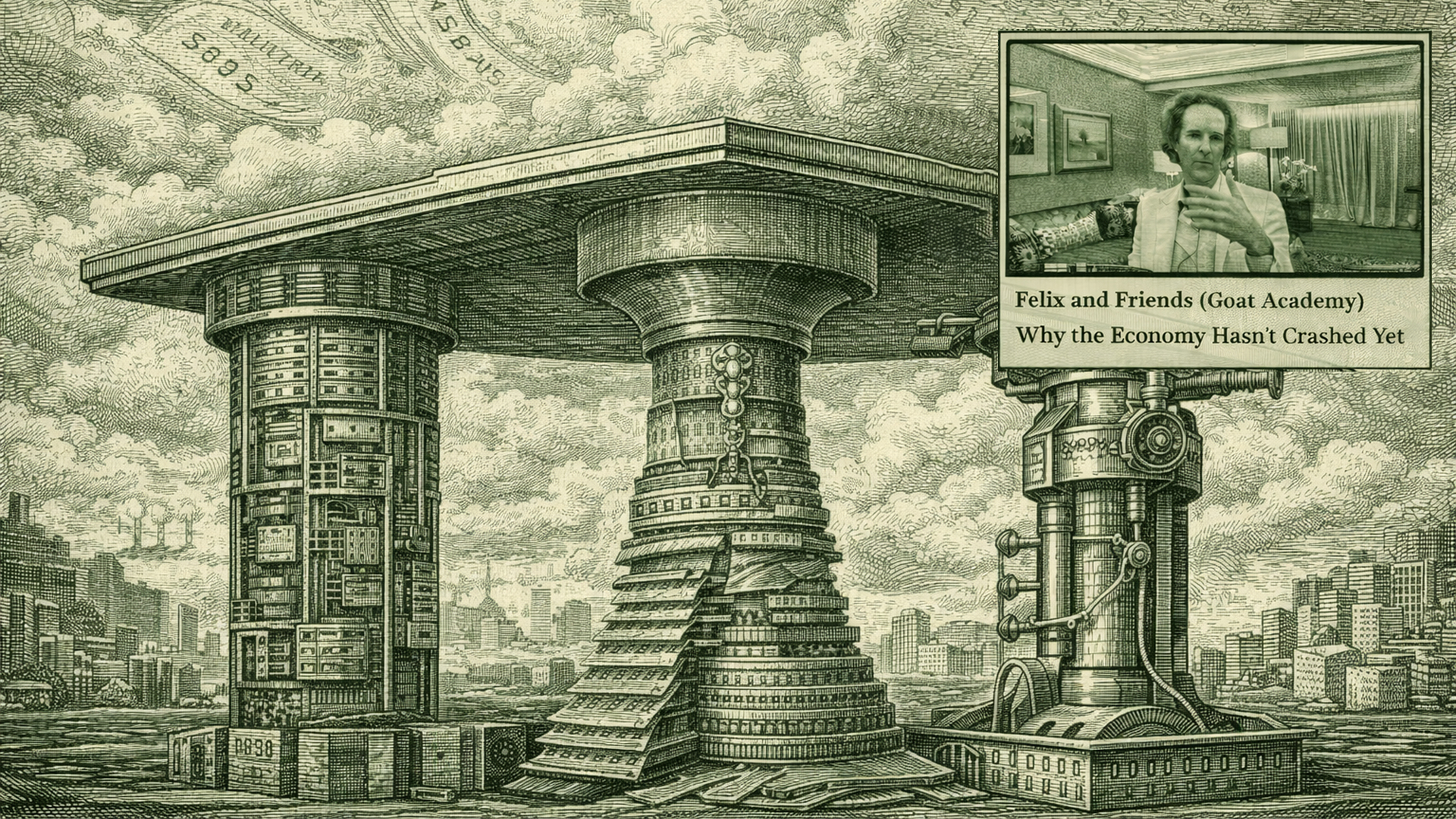
Context: Three “Pillars” as Transmission Channels, Not Narratives
This article translates the popular “three forces keeping the economy from crashing” narrative into a mechanism-based framework. Our Strategy focuses on systems and sequencing rather than headlines or predictions. The question is not whether the pillars sound convincing. The question is what they do to liquidity, credit conditions, interest rates, and market participation.
Markets can remain stable on the surface while pressure builds beneath. When we look at the structure of the current environment, three mechanisms appear to be stabilizing the system: concentrated capital spending, the wealth effect, and policy expectations. Each of these forces can support markets for extended periods, but each also introduces new vulnerabilities.
Our Strategy Phase Framework
Our Strategy organizes market environments into phases that describe how risk evolves over time. Instead of trying to predict exact turning points, we track how structural pressures build and release across the system.
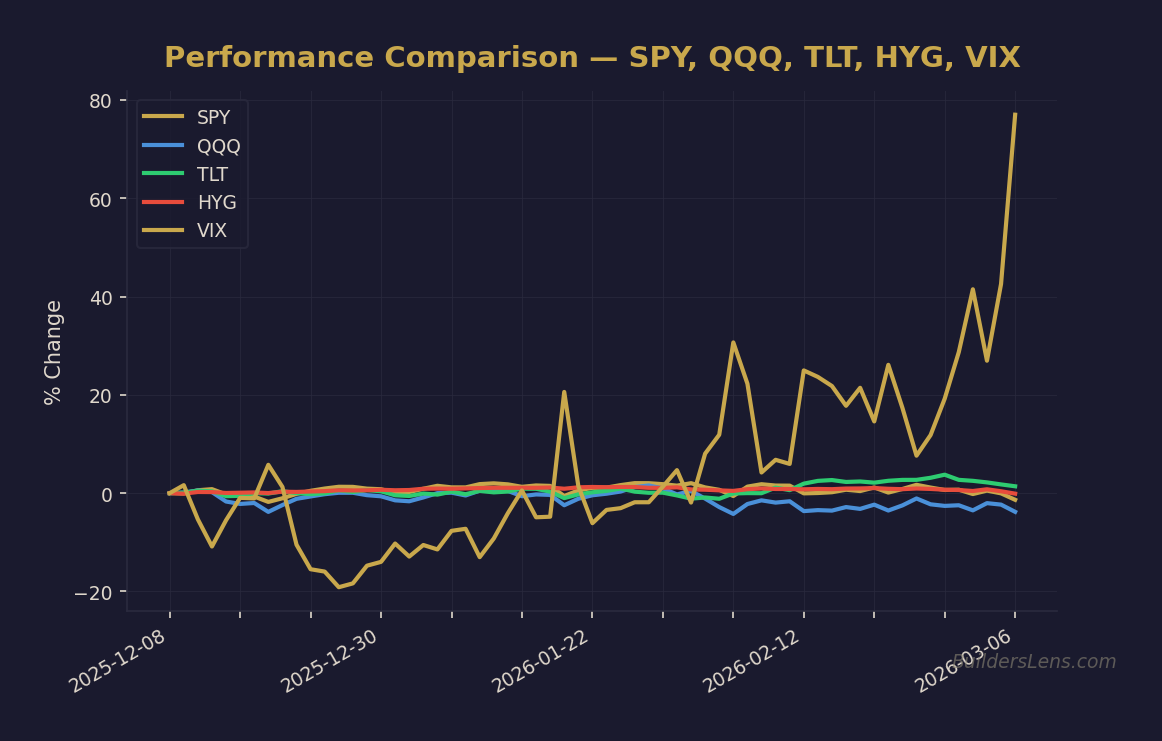
Source: BuildersLens.com Signal Framework | Data as of March 08, 2026
- Phase One: Expansion and Participation — Markets rise with improving liquidity and broad participation.
- Phase Two: Rotation and Compression — Leadership narrows and valuations compress while the broader index can still appear stable.
- Phase Three: Breakdown — Credit stress and tightening financial conditions begin to dominate.
- Phase Four: Liquidity Response — Policy or liquidity injections attempt to stabilize the system.
- Phase Five: Stabilization and Recovery — Markets reset and begin building a new cycle.
Many current signals suggest that the system is still operating within a late Phase One environment, but with rising Phase Two pressures underneath the surface.
Pillar One: Concentrated Artificial Intelligence Capital Spending
The first stabilizing force comes from a relatively small number of mega-cap technology companies investing heavily in artificial intelligence infrastructure. Massive capital expenditures on data centers, compute infrastructure, and cloud capacity have become a major source of demand within the economy.
When a few large balance sheets drive such a significant portion of investment activity, the broader market can remain resilient even if other sectors experience slower growth. The result is a market structure where a handful of firms support both economic activity and equity market performance.
This concentration creates strength in the short term but sensitivity in the longer term. If investment cycles slow, financing conditions tighten, or expected returns fail to materialize, the same concentration can amplify volatility.
Pillar Two: The Wealth Effect
Consumer spending represents a large share of economic activity. However, spending power is not evenly distributed across households. A relatively small percentage of high-income households accounts for a significant share of total consumption.
When asset prices rise, these households often experience a wealth effect. Higher portfolio values and rising home prices encourage spending, which feeds into economic growth and corporate earnings.
This dynamic allows economic data to remain strong even when financial pressure increases for lower and middle income households. The result is what many analysts describe as a “split economy,” where headline indicators appear healthy while underlying vulnerabilities quietly expand.
Pillar Three: The Policy Backstop
A third stabilizing force is psychological rather than purely economic. Markets often assume that policy makers will respond if financial conditions deteriorate significantly. This expectation can act as a stabilizing influence on investor behavior.
When investors believe that policy adjustments will occur during severe market stress, risk-taking can remain elevated for longer periods. The belief itself becomes a form of support beneath the market.
However, reliance on policy expectations also introduces risk. If policy responses arrive later than expected, or fail to address structural pressures, markets can reprice quickly once confidence in the backstop weakens.
Why Markets Can Remain Stable While Stress Builds
When these three forces operate simultaneously, the system can remain surprisingly stable. Large technology investments sustain economic momentum, wealthy households continue spending, and policy expectations support investor confidence.
Together, these mechanisms create a form of structural scaffolding beneath the market. The economy continues moving forward even though underlying imbalances may be growing.
This dynamic explains why markets can appear calm despite rising uncertainty in other areas such as geopolitical risk, debt levels, or inflation pressures.
Signals That Matter Most
Instead of focusing on narratives, Our Strategy monitors several key indicators that reveal how pressure is evolving within the system:
- Liquidity conditions across financial markets
- Credit spreads and refinancing conditions
- Interest rate trends and long-term yield behavior
- Market breadth and participation across sectors
These signals provide a clearer view of structural stability than headlines or forecasts.
Probability Outlook
From a probability perspective, the most likely near-term scenario remains a continuation of the current environment: moderate economic growth supported by concentrated investment and resilient consumer spending.
A secondary scenario involves increasing volatility as valuations compress and leadership rotates within the market. In this environment, indexes may appear stable even while internal market dynamics change significantly.
A smaller probability scenario involves a faster tightening of financial conditions that could expose underlying fragilities more rapidly.
Conclusion: Mechanisms Over Narratives
The central lesson is that markets rarely move because of a single story. They move because of interacting mechanisms. Concentrated capital investment, wealth effects, and policy expectations together help explain why the economy has not experienced a sharp downturn despite widespread concerns.
Understanding these mechanisms helps investors focus on signals rather than reacting emotionally to headlines. When liquidity, credit conditions, interest rates, and participation remain stable, markets can continue operating even while pressure slowly builds beneath the surface.
Educational Disclaimer
This content is provided for educational purposes only and does not constitute financial, legal, or investment advice. Market conditions can change rapidly and individual financial decisions should be made based on personal circumstances and professional guidance.
Research and insights: builderslens.com
Sponsor: v6d.com
📊 Run Your Own Analysis
Use the BuildersLens 65-Signal Analyzer to see live macro positioning for tickers mentioned in this article:
→ Analyze TLT (Long-Term Treasuries)
This article is for educational and informational purposes only and does not constitute investment advice. Past performance is not indicative of future results. Consult with a qualified financial advisor before making investment decisions.