Research · Risk & Optionality
The Wash Sale Rule Most Investors Misunderstand

The Structural Reality of Tax Loss Harvesting
Tax loss harvesting is often framed as a simple optimization strategy: sell losing positions, offset gains, reduce taxes. Mechanically, that description is accurate. Structurally, it is incomplete.
In Our Strategy, we prioritize sequencing, classification, and confirmation over assumption. Tax loss harvesting is not an alpha strategy. It is an accounting strategy operating inside rigid legal constraints.
How the Mechanism Works
When an investment is sold at a realized loss, that loss offsets realized capital gains in the same tax year. If total losses exceed total gains, up to $3,000 may be deducted against ordinary income. Remaining losses typically carry forward to future tax years.
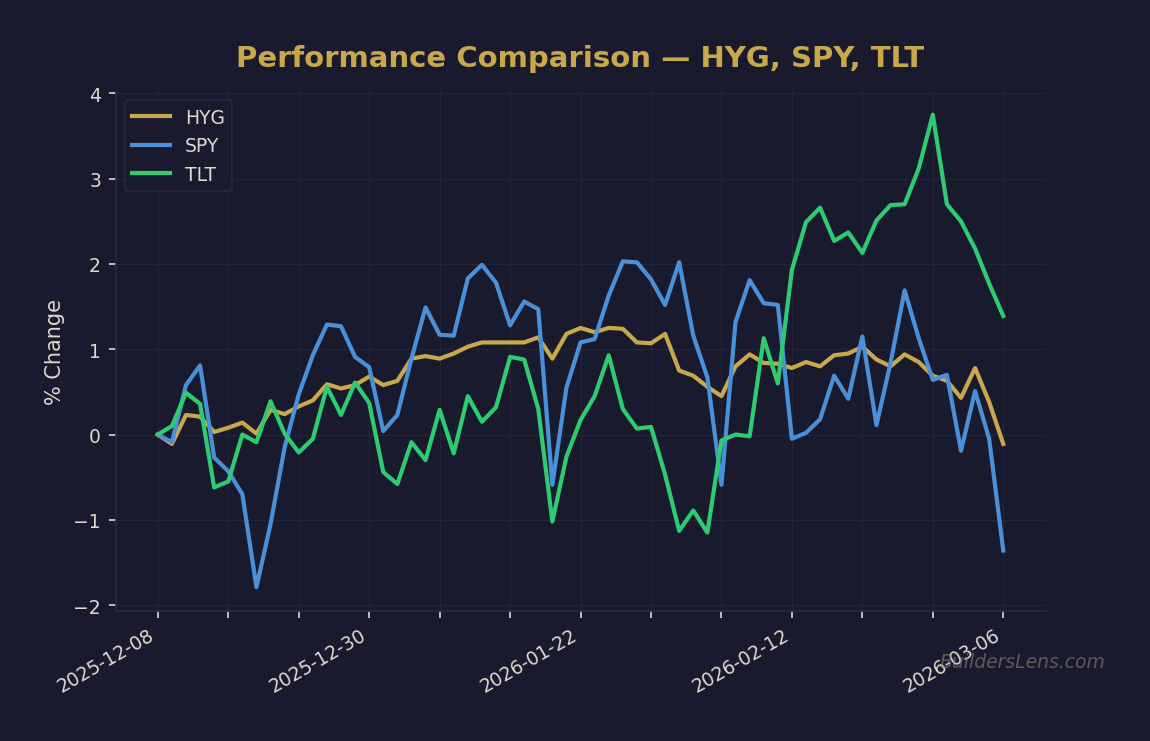
Source: BuildersLens.com Signal Framework | Data as of March 08, 2026
Losses are classified as short-term or long-term. Short-term losses offset short-term gains first. Long-term losses offset long-term gains first. Because tax rates differ between classifications, sequencing materially affects outcome.
The Wash Sale Constraint: The Real Gating Mechanism
The wash sale rule disallows a loss if the same or substantially identical security is purchased within 30 days before or after the sale. This creates a 61-day window surrounding the transaction.
The disallowed loss is not permanently eliminated. It is added to the cost basis of the replacement security, deferring the tax benefit.
However, deferral alters liquidity timing and optionality — both critical variables in portfolio construction.
Cross-Account Complexity
The wash sale rule applies across accounts under common control, including spousal accounts and retirement accounts. Purchasing the same security in an IRA during the wash sale window may disqualify a loss realized in a taxable account.
This cross-account interaction significantly increases recordkeeping complexity.
Year-End Flow Dynamics
Many investors harvest losses late in the calendar year once realized gains are known. This can create temporary selling pressure in underperforming securities.
These flows are mechanical rather than macro-driven. Markets may misinterpret them as fundamental deterioration when they are simply tax sequencing effects.
Mapping to Our Five-Phase Framework
Tax loss harvesting does not define a macro phase. It does not create systemic instability. However, in Phase 1 (melt-up with cracks), year-end flows can exaggerate weakness in laggards. In Phase 2 (stress transition), mechanical selling can amplify volatility in fragile assets.
It is an accelerant — not a catalyst.
What Changes vs What Does Not
- What changes: Liquidity in underperforming assets can temporarily thin near year-end. Price action may reflect flow mechanics rather than fundamentals.
- What does not change: Liquidity regimes, credit stress signals, labor trends, and macro phase classification are not defined by tax harvesting activity.
Probability Timeline Framing
Tax loss harvesting activity tends to cluster in the final quarter of the calendar year. Within that window, short-term volatility in weaker securities becomes more probable. However, it does not materially shift six- or twelve-month macro phase probabilities unless accompanied by credit or liquidity deterioration.
Monitoring Signals
- Unusual weakness in prior-year underperformers
- Rotation into similar but not identical ETFs
- Temporary liquidity compression in small-cap equities
- Volatility spikes isolated to tax-sensitive names
These are flow-based signals, not structural macro shifts.
Invalidation Conditions
- If selling pressure extends beyond the calendar window
- If weakness spreads to high-quality liquid leaders
- If credit spreads widen materially alongside tax flows
Absent those confirmations, tax loss harvesting remains a micro-level accounting event rather than a macro transition signal.
Final Perspective
Tax loss harvesting is discipline under constraint. The wash sale rule is the enforcement mechanism. Investors who treat it casually risk converting a tax benefit into deferred bookkeeping complexity.
In Our Strategy, we respect legal constraints, prioritize confirmation over assumption, and separate mechanical flows from structural regime change.
Get the Daily Phase Brief
Signal changes, data releases to watch, and today’s regime assessment — delivered every morning before market open.
Join investors tracking the macro cycle. Unsubscribe anytime.
📊 Run Your Own Analysis
Use the BuildersLens 65-Signal Analyzer for live macro positioning:
→ Analyze HYG (High Yield Credit)
This article is for educational and informational purposes only and does not constitute investment advice. Past performance is not indicative of future results. Consult with a qualified financial advisor before making investment decisions.