Research · Market Internals
Why Gamma Levels Matter More Than The Earnings Beat
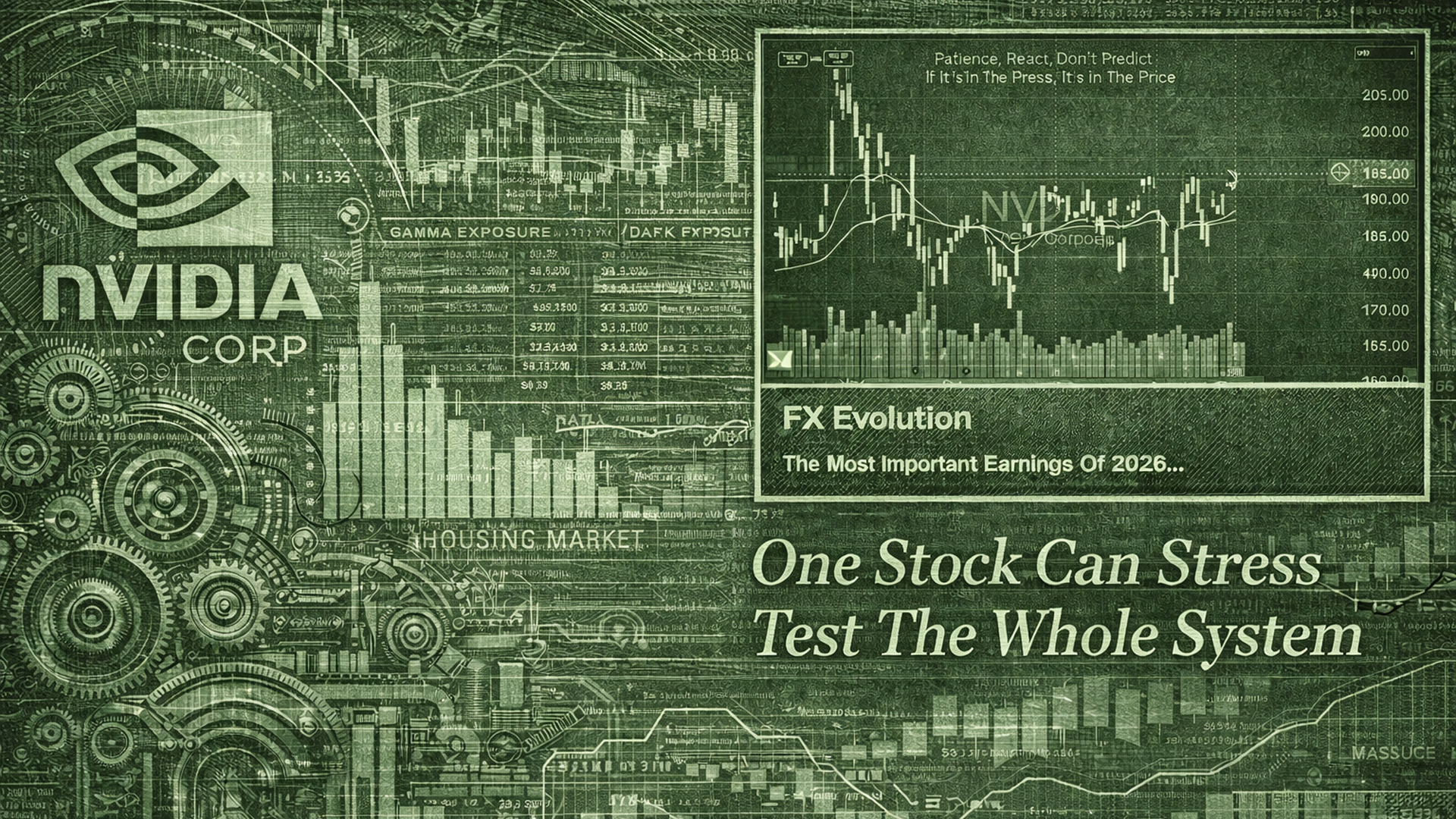
Nvidia Earnings As A Market Structure Stress Test
The market often appears calm right before a catalyst forces a repricing across the entire system. Nvidia’s earnings represent that kind of event. With Nvidia now one of the largest companies in the world, its post-earnings price movement can influence not just semiconductor stocks, but the broader equity market through positioning, options exposure, and liquidity dynamics.
Our Strategy focuses on mechanisms rather than narratives. Instead of asking whether Nvidia’s earnings will beat expectations, the more important question is how the market structure reacts once the results are released.
The Mechanism: Gamma, Dealer Hedging, And Reflexivity
Why Options Positioning Matters
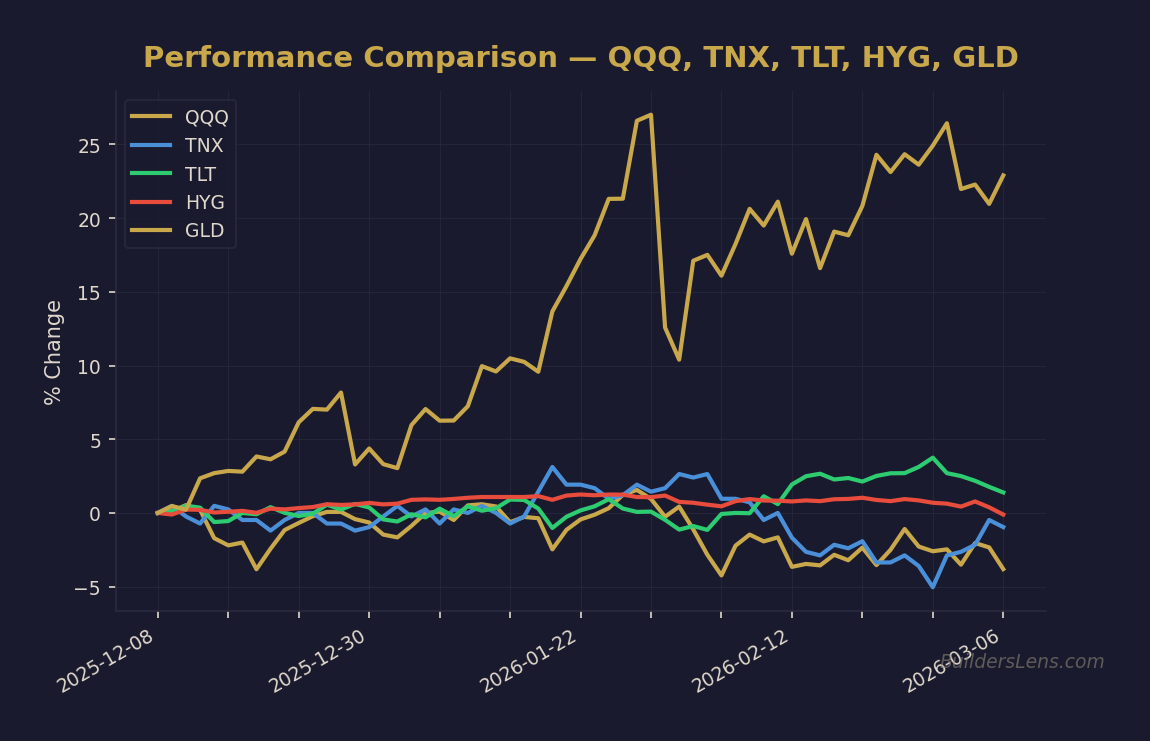
Options markets influence how price moves after major events. When positioning becomes concentrated around key strike levels, dealer hedging flows can amplify or suppress volatility depending on which levels price moves through.
Source: BuildersLens.com Signal Framework | Data as of March 08, 2026
Positive Gamma Stabilization
If price moves above large call positioning zones, dealer hedging often acts as a stabilizing force. In these environments volatility tends to compress and markets can grind higher in a controlled fashion.
Negative Gamma Acceleration
If price falls below major put positioning zones, hedging flows can become pro-cyclical. In this regime, volatility tends to increase and price movements can accelerate quickly as hedging activity compounds directional moves.
This is why major earnings events sometimes trigger market-wide reactions. It is not simply the earnings numbers that matter. It is how those numbers interact with positioning and liquidity.
The Broader Macro Backdrop
Late Cycle Rotation Signals
Recent market behavior shows divergence across sectors. Energy, metals, and commodity-linked industries have demonstrated relative strength, while financials and some growth sectors have experienced periods of weakness. Divergences like this often emerge later in economic cycles when capital begins rotating between sectors.
Housing As A Transmission Channel
Housing activity remains an important signal for the broader economy. Slowing housing transactions and declining building permits can ripple through credit markets, consumer sentiment, and bank balance sheets. These changes rarely trigger market reactions immediately, but they can build pressure beneath the surface.
Liquidity And Market Plumbing
Liquidity systems such as repurchase agreements and short-term funding markets often act as early indicators of financial stress. Single signals are rarely meaningful on their own. However, clusters of signals across funding markets, credit spreads, and economic activity can raise the probability that the next catalyst produces a stronger market response.
Framework Mapping: Phase Pressure Instead Of Predictions
Within Our Strategy’s framework, the current environment resembles a late-cycle stabilization phase where markets continue functioning normally while structural pressure gradually builds underneath.
Current Phase Context
Markets remain relatively stable, yet divergences across sectors and macro signals suggest that the system may be approaching a transition point. Nvidia’s earnings become important because events of this scale can reveal whether the system absorbs shocks smoothly or reacts with increased volatility.
Probability Timeline
Phase One: Stabilization And Rotation
Approximately fifty five percent probability that markets remain in a stabilization phase through the next several weeks. In this environment volatility remains contained and sector rotation continues without a broad market breakdown.
Phase Two: Volatility Expansion
Approximately thirty percent probability that volatility begins to increase if catalysts interact with existing fragilities in financial conditions, credit markets, or economic activity.
Phase Three: Policy Response
If volatility expands significantly, central banks and policymakers often respond with liquidity measures or adjustments to monetary policy frameworks.
Phase Four: Real Asset Repricing
In later stages of macro transitions, real assets such as commodities and hard assets sometimes become leadership sectors as policy responses reshape capital flows.
Signals To Watch After Nvidia Earnings
Confirmation Signals
- Market breadth improving following the event
- Pullbacks remaining controlled without acceleration
- Volatility declining after the initial reaction
Invalidation Signals
- Relief rallies failing quickly
- Increasing correlation across asset classes
- Persistent weakness in financial stocks
- Rising demand for defensive assets
Multi Asset Monitoring Checklist
- Equities: S&P five hundred and Nasdaq breadth behavior
- Semiconductors: Nvidia and broader semiconductor sector momentum
- Rates: Two year and ten year Treasury yields
- Credit: High yield spreads and corporate bond performance
- Commodities: Gold, silver, and energy sector leadership
- Digital Assets: Bitcoin as a liquidity sensitivity indicator
What Matters Most
Nvidia’s earnings are important not simply because of the company itself, but because of what the market’s reaction reveals about the broader financial system.
The earnings result becomes the catalyst. The market’s response becomes the signal.
By focusing on mechanisms rather than narratives, investors can better interpret what the system is communicating as events unfold.
Educational Notice
This content is for informational and educational purposes only and reflects a probability-based analytical framework. It should not be considered financial advice.
📊 Run Your Own Analysis
Use the BuildersLens 65-Signal Analyzer to see live macro positioning for tickers mentioned in this article:
This article is for educational and informational purposes only and does not constitute investment advice. Past performance is not indicative of future results. Consult with a qualified financial advisor before making investment decisions.